
A millimetre can cause a surprising amount of trouble in this hobby. Take one off a case and a watch suddenly becomes the release everyone was waiting for. Add one and you risk a lengthy discussion about whether the brand has lost its way. We will happily scrutinise a handset, debate a bracelet and develop strong feelings about the precise shade of a bezel.
And honestly, that is part of the enjoyment. A watch can be technically excellent and leave you completely cold. Another can have a slightly strange dial or an unexpected combination of finishes that makes you keep coming back for another look. Explaining the attraction is sometimes harder than recognising it.
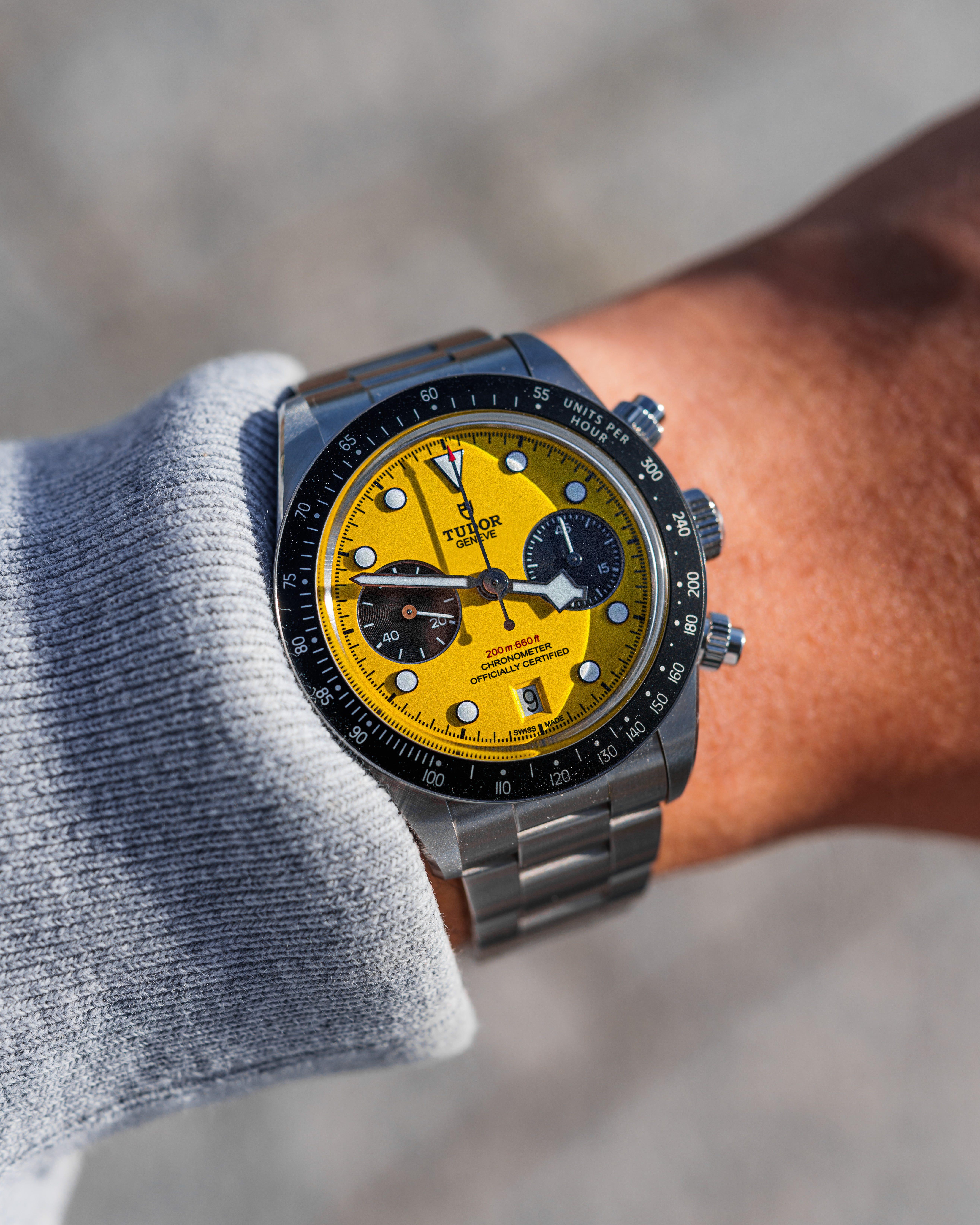
We understand, in other words, that small design choices can make an enormous difference. Which is why I find it odd when a Tudor gets dismissed with three words: “poor man’s Rolex”. Suddenly, all those preferences disappear, and the only detail that apparently matters is the name on the dial.
The family resemblance is undeniable. A Black Bay recalls the proportions and styling of earlier Submariners. What interests me is how differently the two brands now treat that shared inheritance.
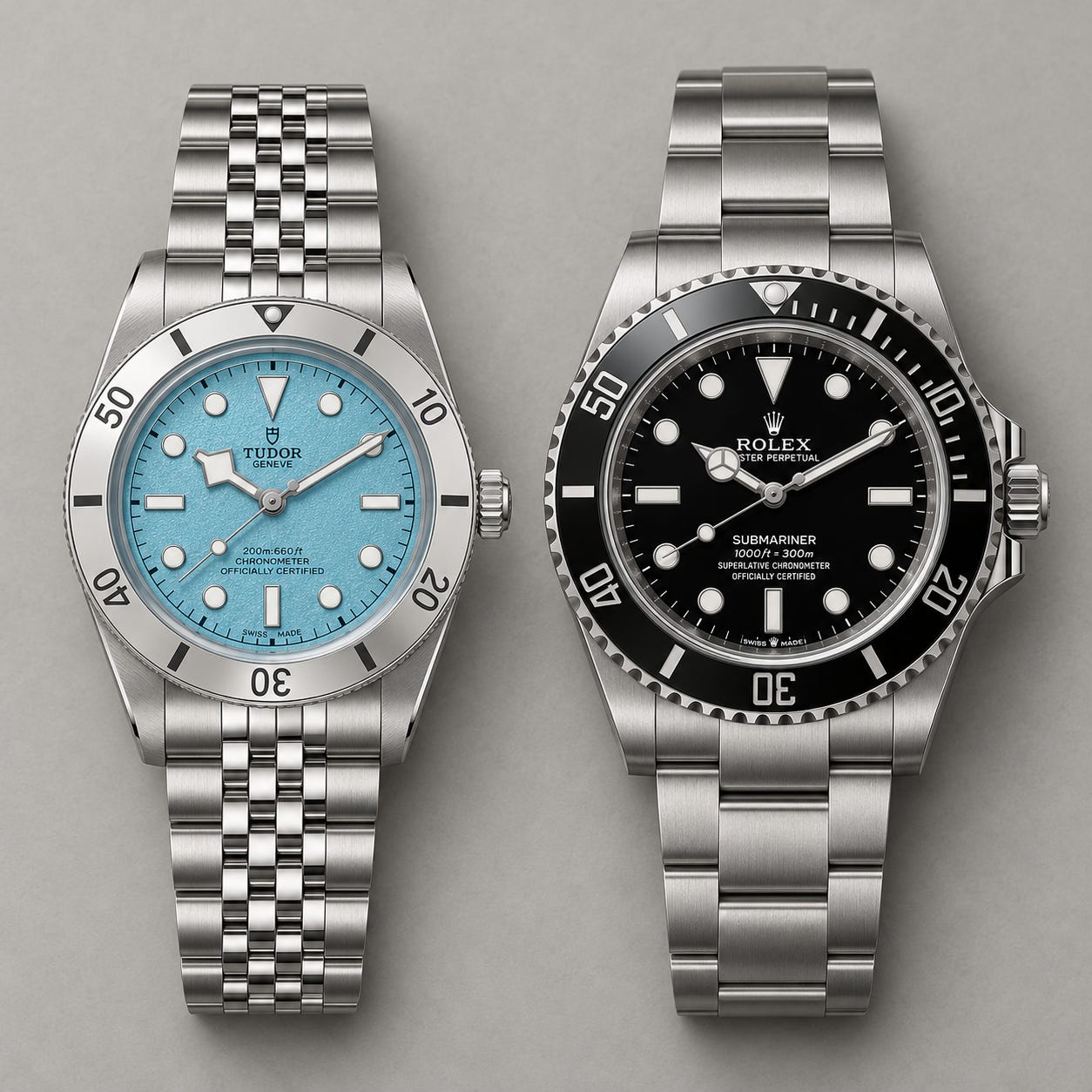
Rolex develops its established sports watches through careful refinement. Materials and movements improve, but the identity remains consistent. A modern Submariner looks reassuringly like a Submariner because that continuity is part of what people are buying. Tudor’s Daring collection allows itself more freedom with those familiar shapes.
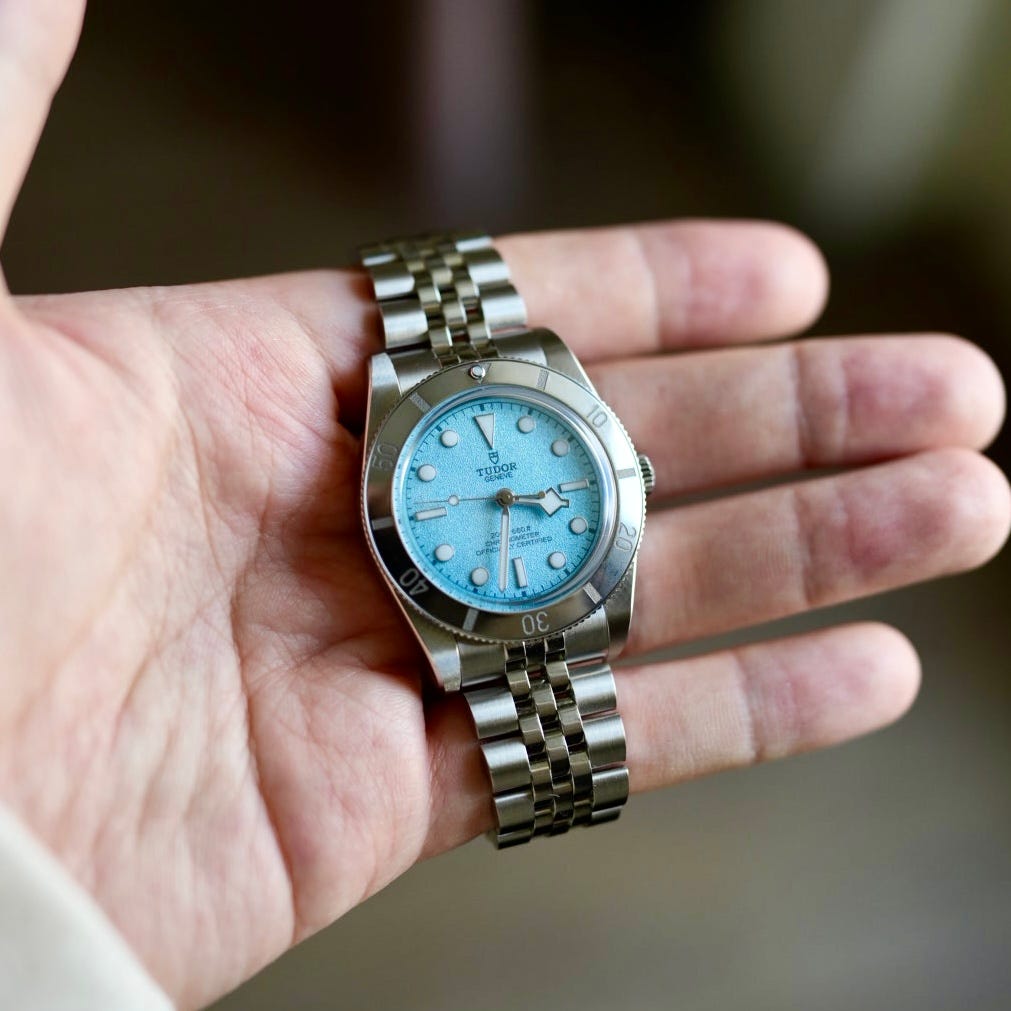
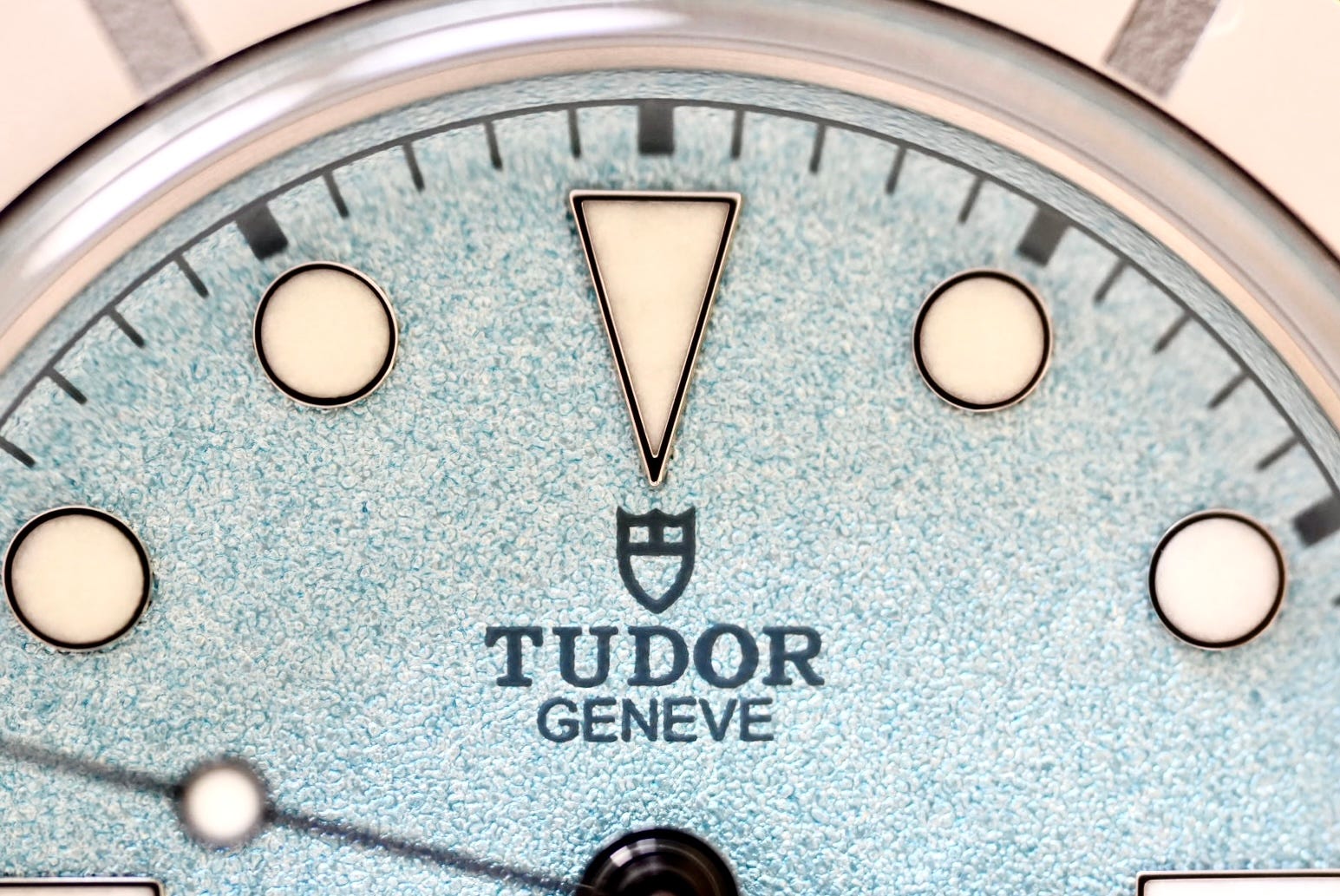
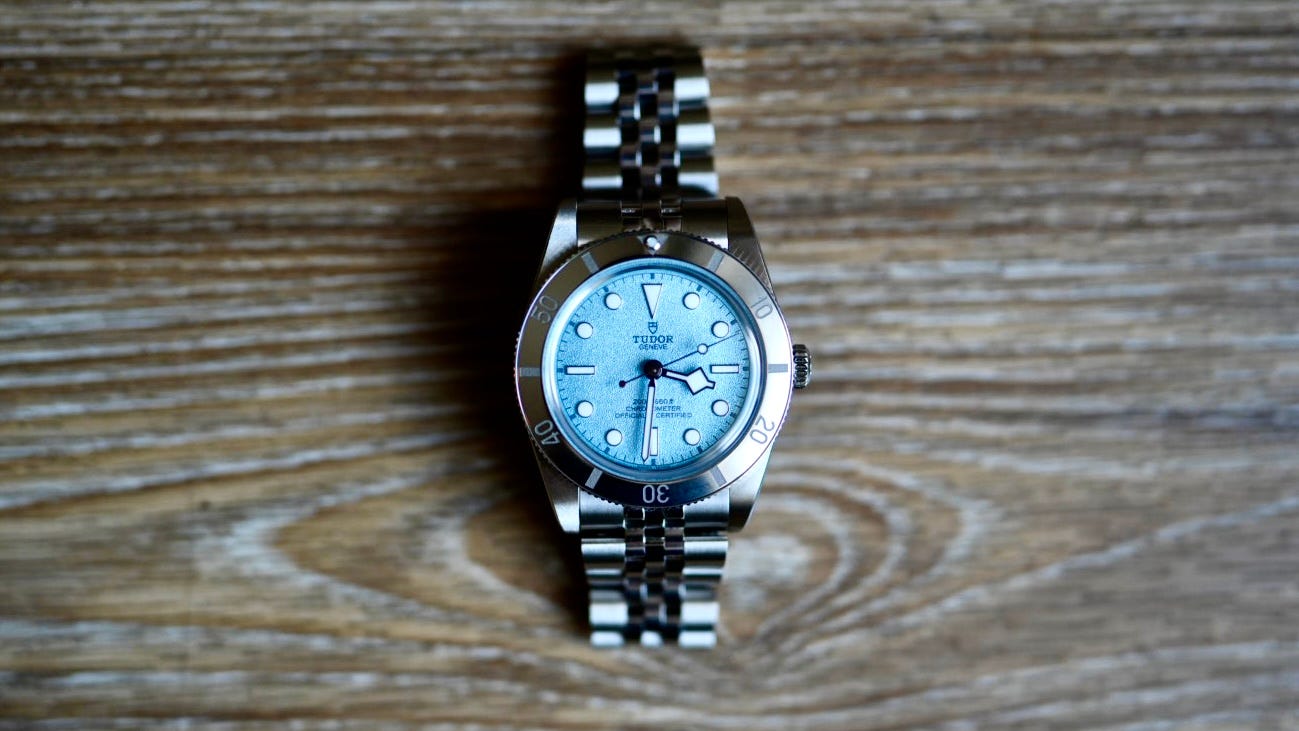
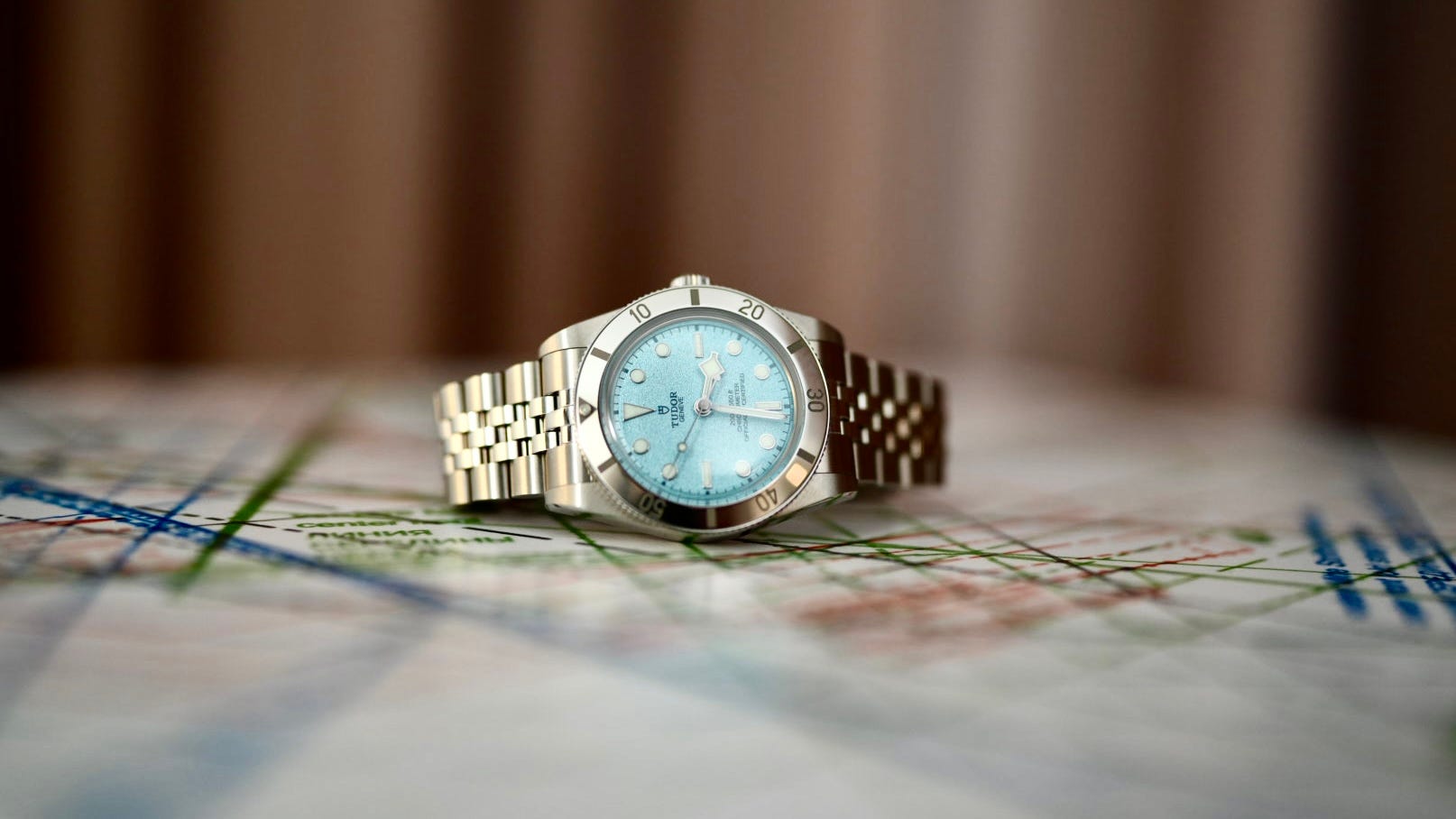
The Black Bay 54 “Lagoon Blue” is the clearest example. Its 37mm case preserves the proportions of an early dive watch, while a sand-textured pale blue dial, mirror-polished steel bezel insert and five-link bracelet transform its character. In other words, it still looks like a descendant of a vintage diving instrument, but one with considerably less interest in looking serious.
I struggle to imagine Rolex giving a contemporary Submariner that treatment. Changing its proportions, bezel finish, dial texture and bracelet together would substantially alter the watch’s established identity. Tudor makes that departure the attraction, using a familiar design as the foundation for something more playful.
For someone drawn to that particular combination, a Submariner would leave several preferences unsatisfied. Spending more would not deliver the compact case, pale blue texture or polished steel bezel they wanted. The difference in price cannot explain away the difference in design.
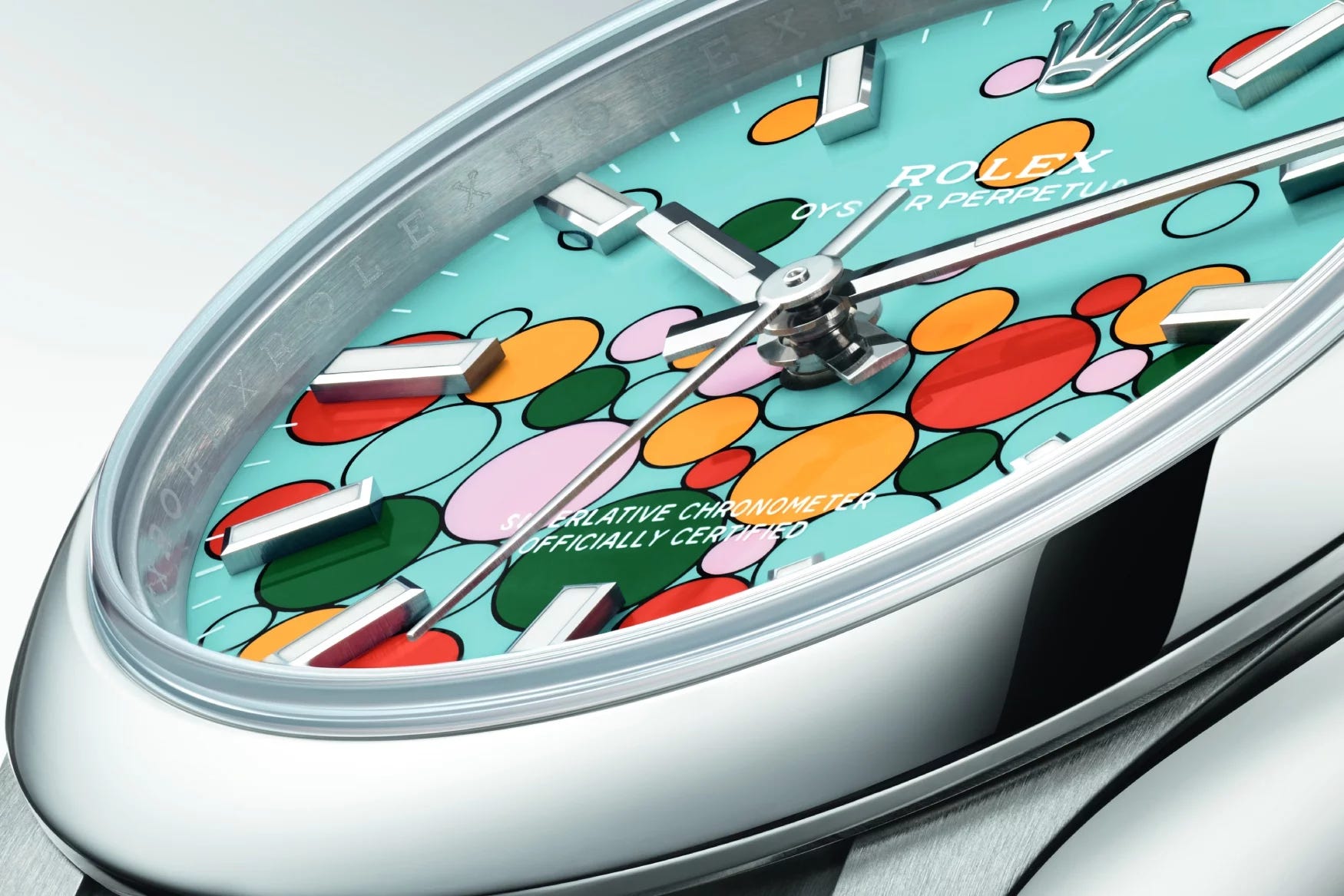
Of course, Rolex can be playful. The Celebration-dial Oyster Perpetual and puzzle-dial Day-Date make that clear. My point is narrower: Tudor is taking liberties with traditional sports-watch designs that Rolex largely preserves in its corresponding models. A colourful Rolex elsewhere in the catalogue does not replace the Lagoon Blue’s particular reinterpretation of a classic diver.
I can see that approach appealing especially to someone who has already experienced Rolex. After enjoying the refinement of a conventional Rolex sports watch, a collector might want familiar proportions and styling with a less restrained execution. A Tudor could offer something their existing collection lacks, even when another Rolex is comfortably within reach.
Nobody needs to own a Rolex first, however. Someone buying their first expensive watch can appreciate exactly the same qualities. The Daring collection gives them a choice that deserves to be understood through its design, rather than its position on a price list.
If Rolex does not make the watch you want, buying the Tudor hardly sounds like settling.
Me thinks the lady prosteteth too much. I get that "poor man's", not a term Rolex or Tudor uses) is probably meant to sting and disparage, but the brand was originally designed by Wilsdorf to provide a cheaper, or if we wish to go with today's polite euphemism "more affordable" alternative to the Rolex, expanding customer base, perhaps creating loyalty and aspiration, and protecting the premium pricing of Rolex. They even used Rolex cases and my one Tudor Prince has "Original Oyster Case by Rolex, Geneva" as the only engraving on the case back, although Tudour WatchCompany is stamped on the Oyster Bracelet look alike. What's different, the guts of course, the solution was always a cheaper, not as highly regulated mechanism even if dials and handsets could be quirky. Its not really much different from any single brand offering chronometer standard and non-chronometer standard movements in near identical watches like say Omega Geneve and Constellation models, or AP or Vacheron with an offshore or Fifty-one for younger vibe and lower cost. Its just that in those cases any discrimination is only between models rather than brands. Willsdorf was after all a master of brands.
On the other hand modern Tudor is quite different than the Tudor that earned the epithet. While initially mostly just a way to capture more steel sports watch sales than Rolex prudently could produce, they also came out with colour ways and models, edgy advertising and lately even technical improvements with in-house movements. Tudor has gradually gained some identity that to be fair it never really had before, plus a more premium pricing making it less of a clear bargain watch. As with the example you cite, a small no-contrast (steel dive bezel on steel case) watch in pastel colour and a jubilee bracelet, yes that is a bit unusual and might conceivably be preferred by some over more expensive and more finely calibrated Rolex's if price were no issue. I don't actually know anyone for whom that is true, but it is conceivable.