
Case diameter is the simplest way to compare the size of watches. The difficulty begins when we assume that it also tells us how they will look on the wrist. A 45mm watch can look entirely at home, without appearing as large as expected, while a 42mm watch can seem excessively broad and bulky. Even a thick 39mm watch can look less balanced than one with a larger diameter. The order in which we rank watches by their measurements does not necessarily hold once we put them on.
The Tudor Black Bay Pro is a useful example. Its 39mm diameter suggests a compact watch, but its case is 14.6mm thick. That height, set against a relatively narrow footprint, can give it a substantial, almost block-like appearance on the wrist. A watch that covers less of the wrist does not necessarily look smaller. Diameter tells only half the story. The rest depends on the case’s shape and proportions, and how they relate to the wrist beneath it.
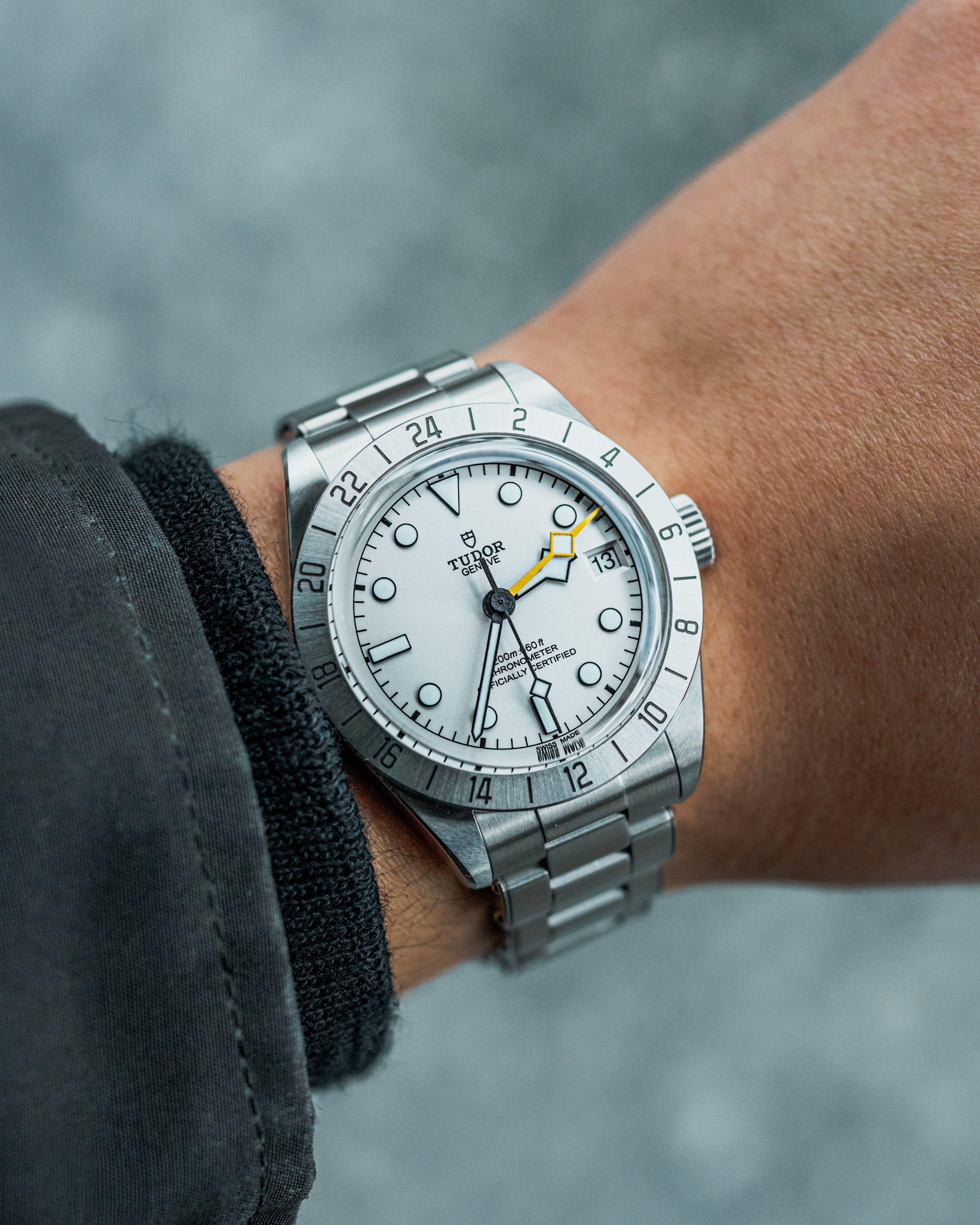
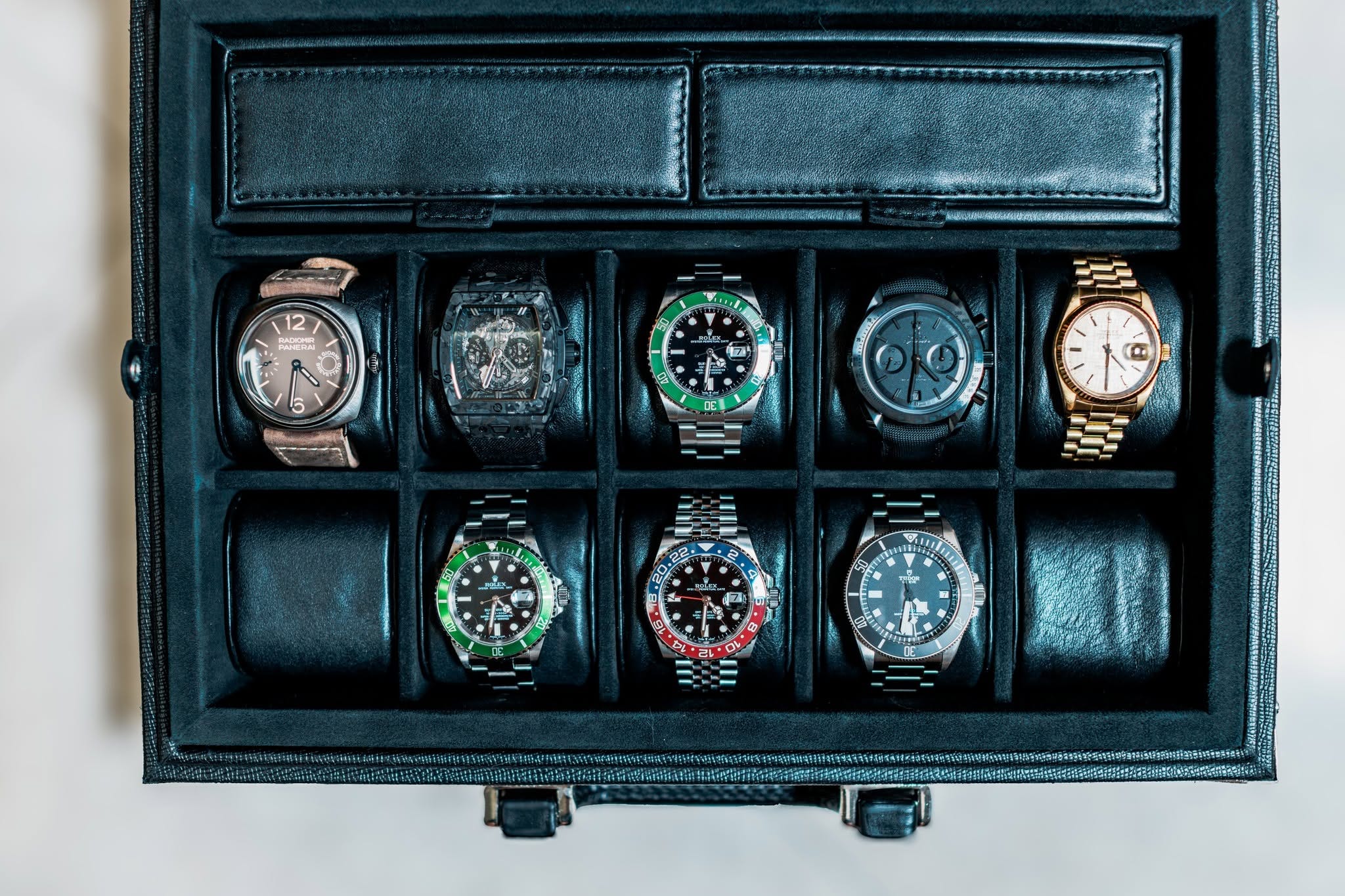
I have encountered this difference repeatedly over roughly 15 years of collecting. My wrist measures around 18cm in circumference. Had I used that measurement to establish a fixed limit on case diameter, several watches would never have entered my collection. Trying them on often overturned my expectations. Watches that sounded excessive on paper looked right, while smaller ones could seem awkwardly out of place. Those experiences gradually taught me to look at the whole form of a watch before drawing conclusions from its diameter.
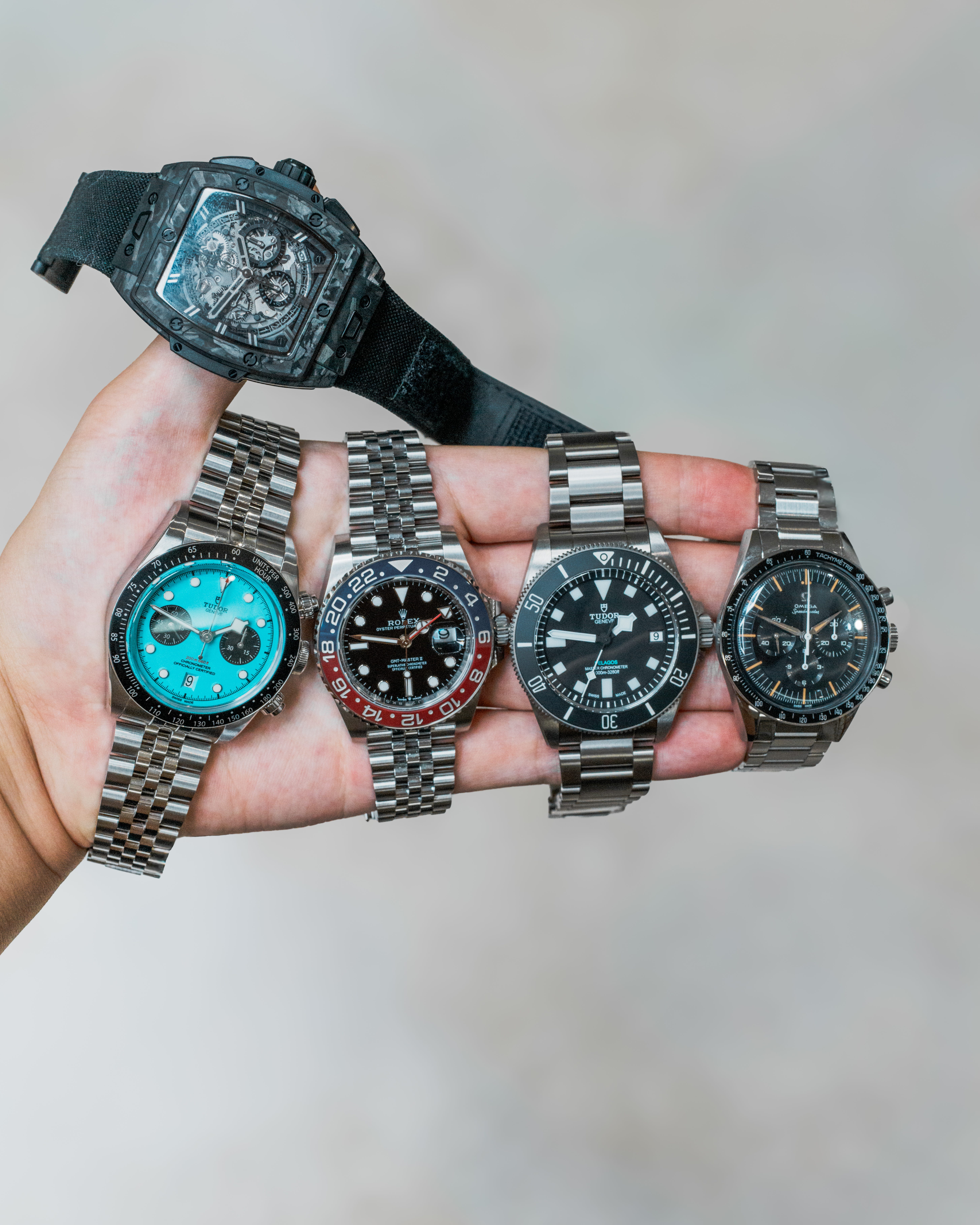
There is nothing wrong with preferring smaller watches. But turning that preference into a rule applicable to every design makes it easy to reach a verdict before seeing the watch in question. The Roger Dubuis Excalibur Spider, Omega Speedmaster Dark Side of the Moon Black Black, Panerai Luminor Venticinque and Tudor Pelagos Ultra all taught me to reserve judgment. Each qualifies as a large watch by diameter. None could be adequately understood from that number alone.
Roger Dubuis Excalibur Spider
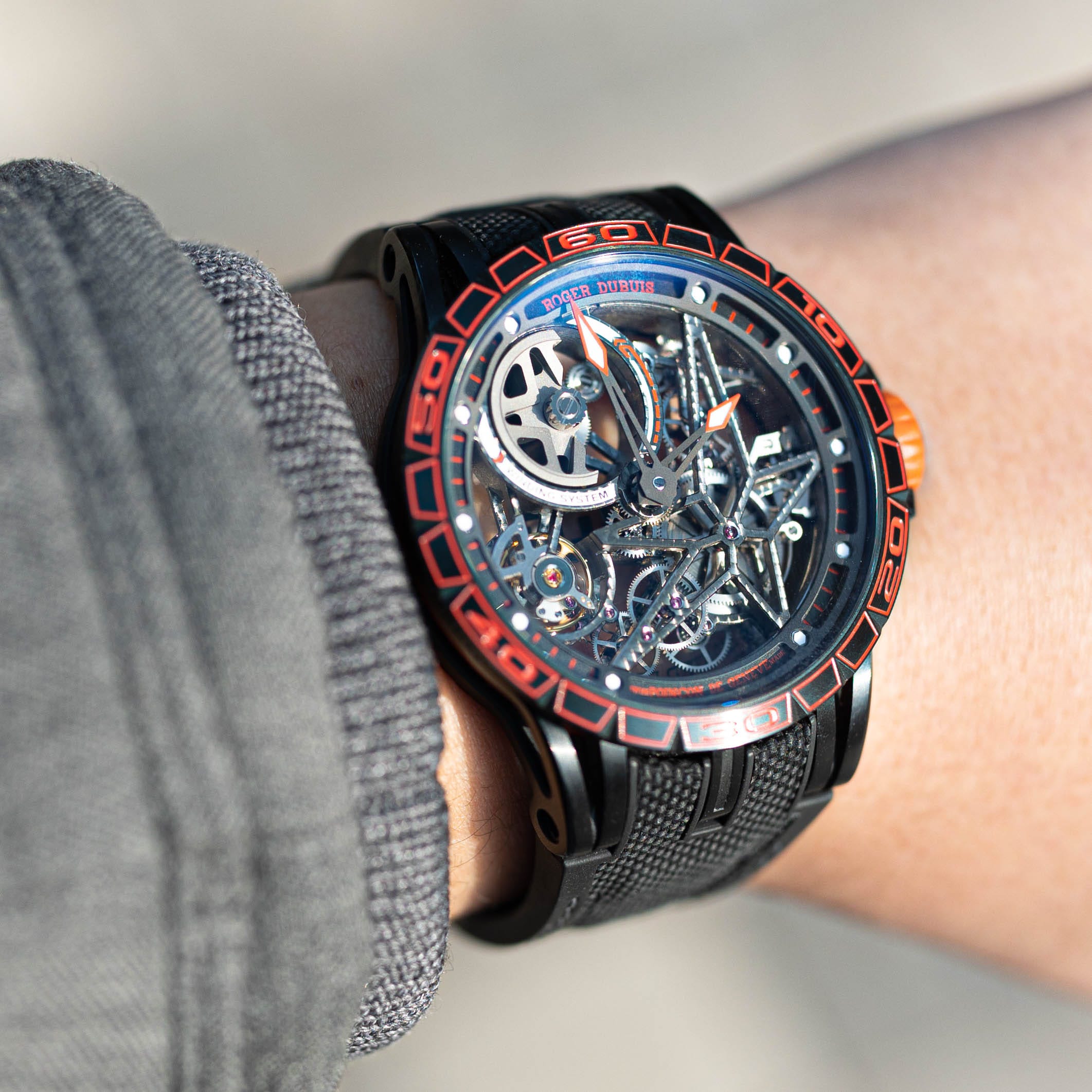
At 45mm, the Excalibur Spider was hardly an obvious candidate for my wrist. Yet when I wore it, it looked more natural on me than the current 41mm Rolex Submariner. It was 4mm wider, but those additional millimeters did not translate directly into an excessive appearance.
To understand why, it helps to look at the watch from the side as well as from above. The Excalibur’s lugs curve distinctly downward, following the contour of the wrist. The case remains broad, but the way it wraps downward gives watch and arm a more continuous outline. It did not look like the large, separate object perched on my wrist that the measurement had led me to imagine.
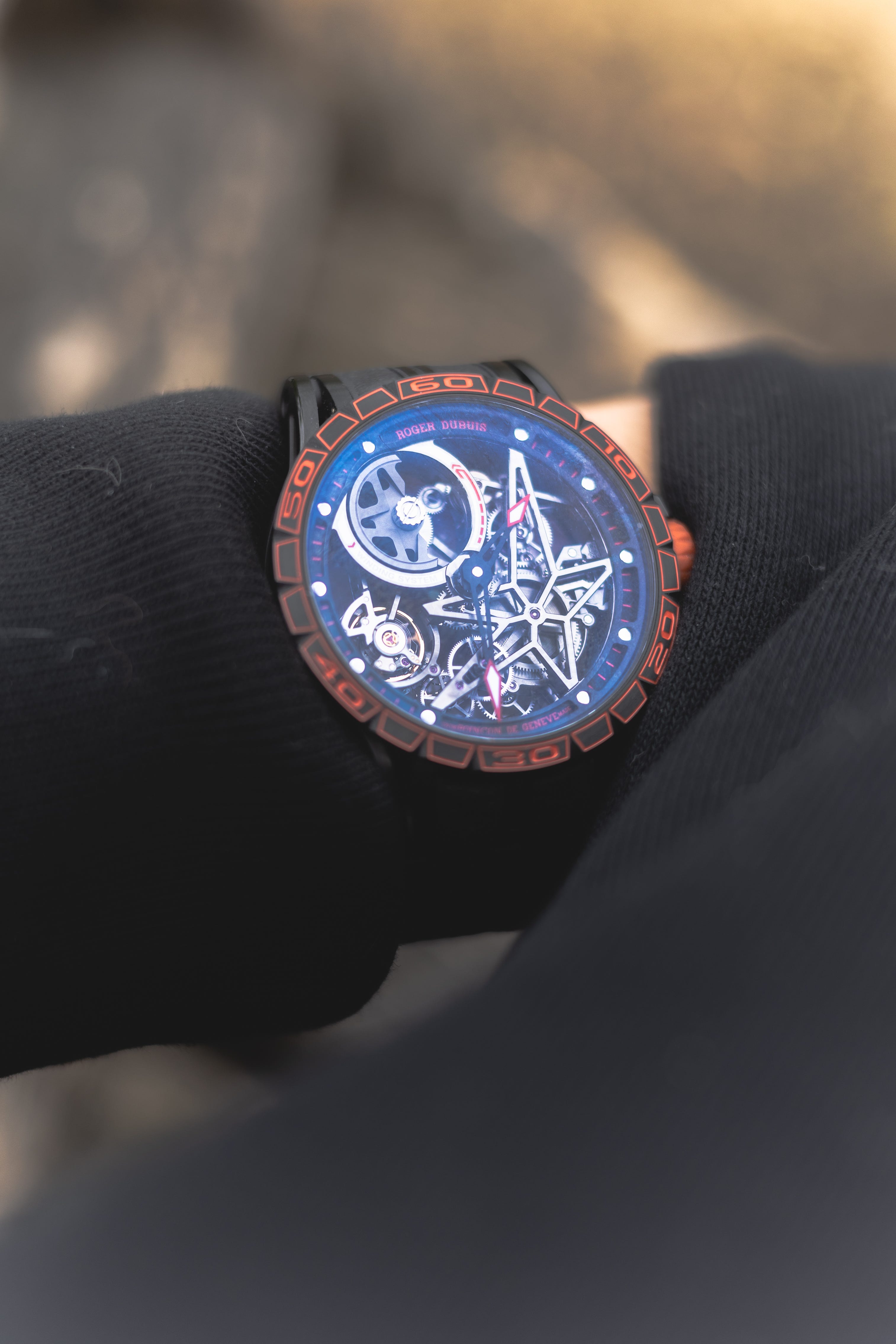
The Excalibur is, of course, conspicuous. Its openworked movement and assertive architecture could never pass for a discreet dress watch. But a design that attracts attention is different from one that looks disproportionately large. The former is part of the character I enjoy here. The latter can only be judged by looking at the relationship between case and wrist. A watch’s flamboyance alone does not establish that it is the wrong size.
The Excalibur changed how I assess that relationship. Where 45mm once made me think only about the width of a case, I now consider how that width meets the curve of the wrist. Judging a watch’s size in isolation and judging its proportions when worn are different exercises.
Omega Speedmaster Dark Side of the Moon Black Black
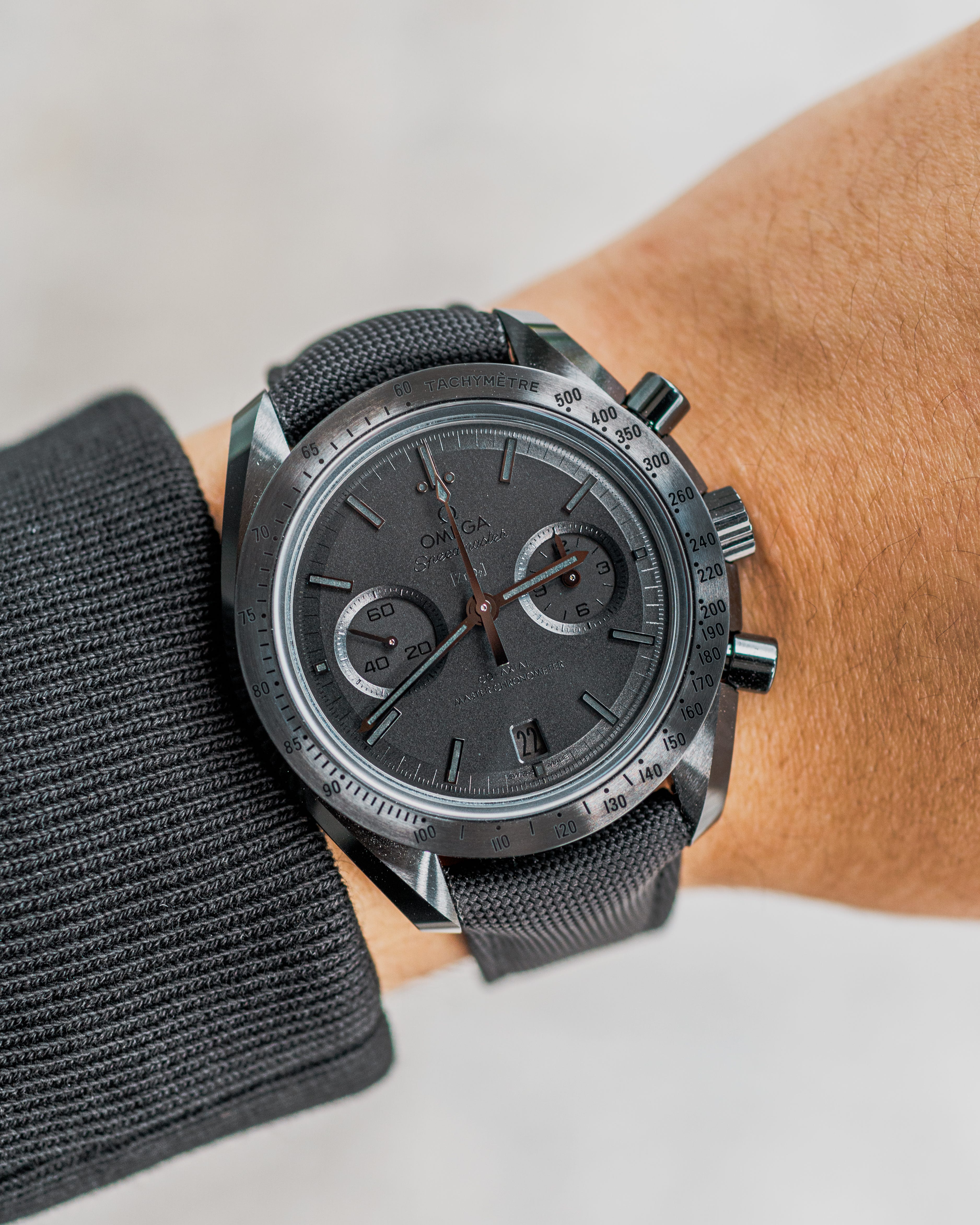
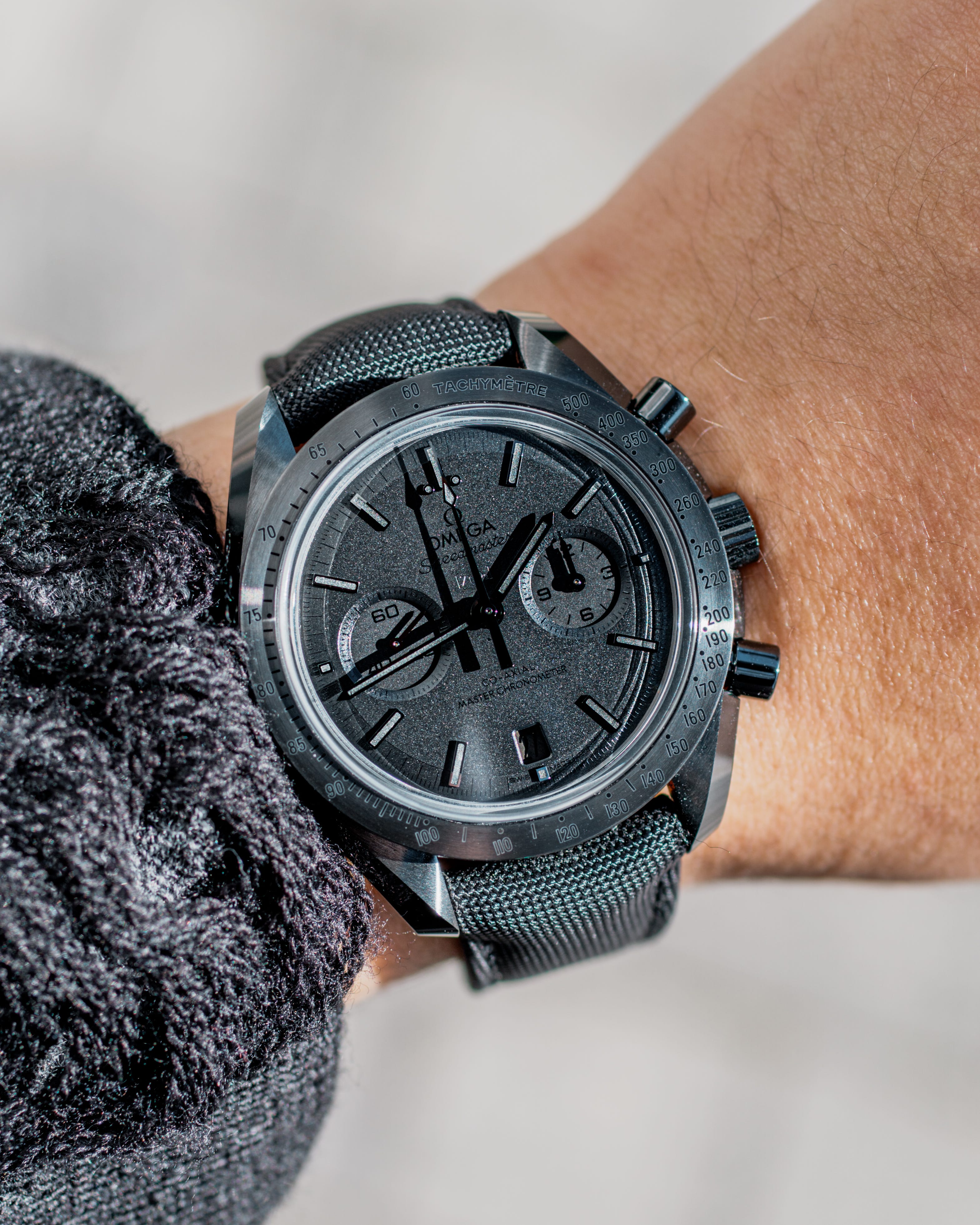
The Dark Side of the Moon measures 44.25mm in diameter. Had I restricted my shortlist to watches of 40mm or less, I would never have tried it on. In person, however, it looked considerably better balanced than the figure suggested. Wearing it corrected the image I had formed from its width alone.
The relatively short lugs played an important part. A broad case presents a different outline when its lugs do not extend far above and below it. What we see is the complete shape, including the lugs and strap, rather than a single line drawn across the center of the case. The Omega made that distinction clear. The exaggerated proportions I had associated with 44.25mm simply did not materialize on my wrist.
It is tempting at this point to replace diameter with lug-to-lug length, the distance between the opposing lug tips, as a new absolute standard. But that still reduces a three-dimensional form to one measurement. Two watches with the same overall length can sit very differently in relation to the wrist if one has horizontal lugs and the other’s curve downward. The prominence of the case flank and the angle at which the strap falls away also influence what we see.
We need to identify what makes a watch look large in the first place. A case that spreads widely across the wrist creates a different impression from one whose height dominates the profile. Diameter remains useful information, but it cannot settle how the watch will look before we have worn it.
Panerai Luminor Venticinque PAM02025
The Panerai also shows why the proportions within a design matter. The Luminor Venticinque PAM02025 has a 44mm case, and that scale is central to its appeal for me. The generous case, simple dial and substantial lugs work together to create the familiar Luminor form. Reducing the number would not necessarily improve their relationship.
Unlike the Omega, the Luminor has long lugs. Yet their broad, downward-curving shape follows the wrist, carrying the width of the case into its contour. Viewed from above, the broad case and lugs might appear simply to add more size. On the wrist, their forms connect. The Panerai showed me that shortening the lugs is only one way to bring a large watch into proportion.
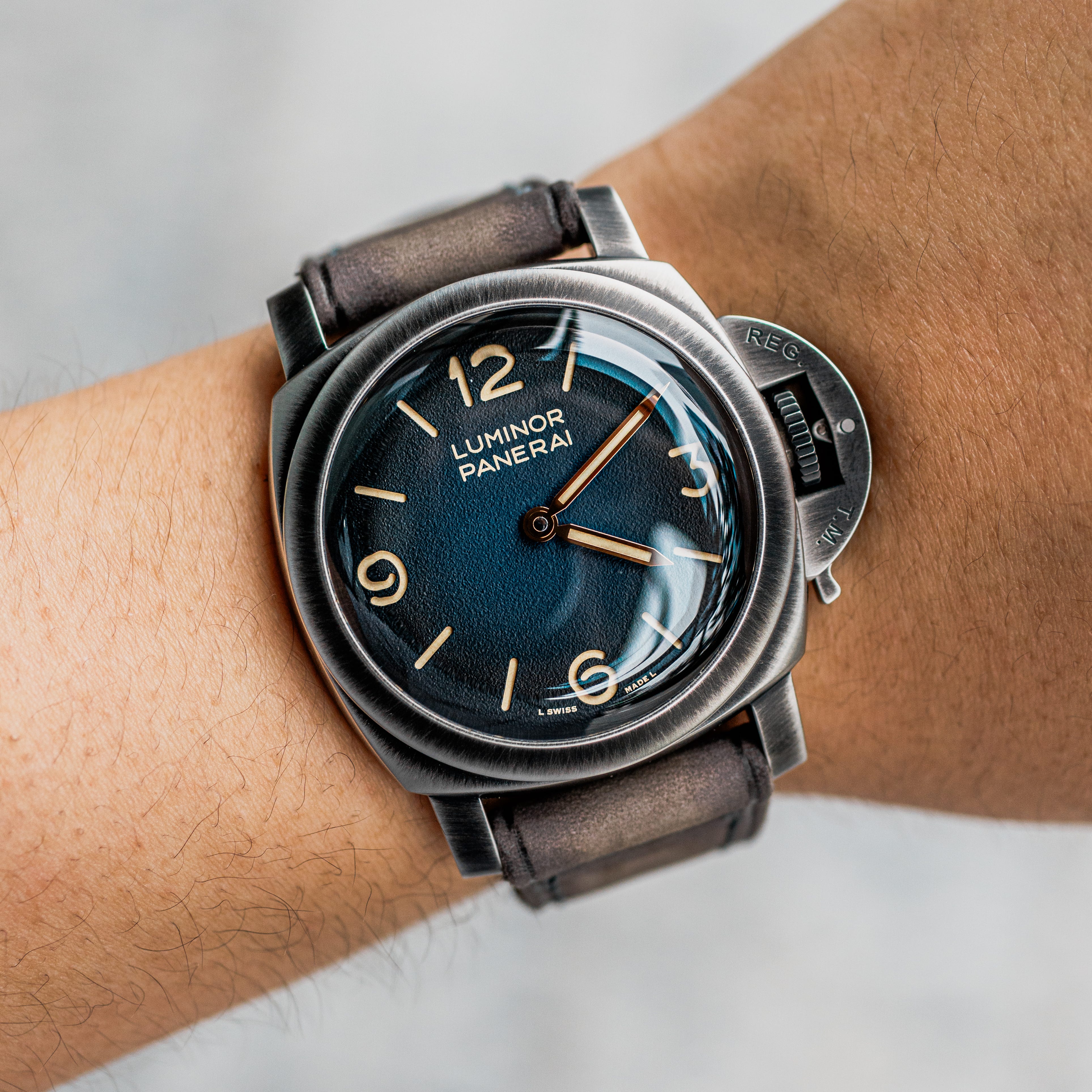
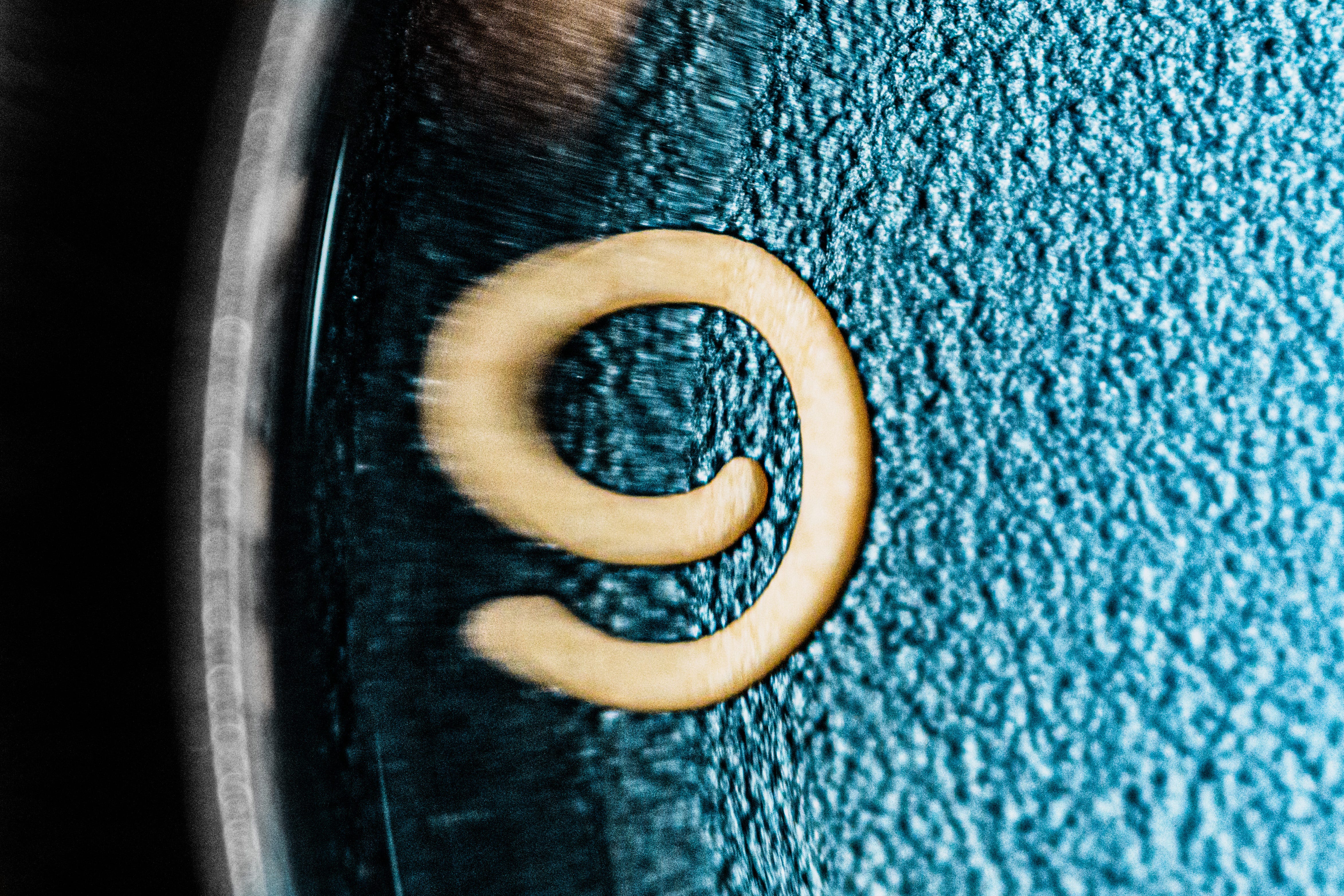
The surface treatment also affected my impression. The darkened Brunito finish does not emphasize the broad surfaces with the sharp reflections of polished steel. Together with the blue dial, it gives the watch considerable presence without making every surface compete for attention. Finishing changes how the outline of a case is revealed, even when its dimensions remain the same. A measurement can be unchanged while the visual impression differs.
I like the way a Luminor occupies a generous portion of the wrist. That does not mean I want the watch to look disproportionately large on my arm. For me, the Venticinque gets that balance right. The dial and case are convincingly proportioned, while the lugs connect that breadth to the wrist’s curve. I cannot assume that making it smaller would make it look better on me.
Tudor Pelagos Ultra
I was not immediately inclined to buy the Pelagos Ultra. The description of a substantial 43mm dive watch brought the Rolex Deepsea to mind. I had owned a Deepsea and found it too large for my wrist. I expected a watch of similar character to produce a similar result.
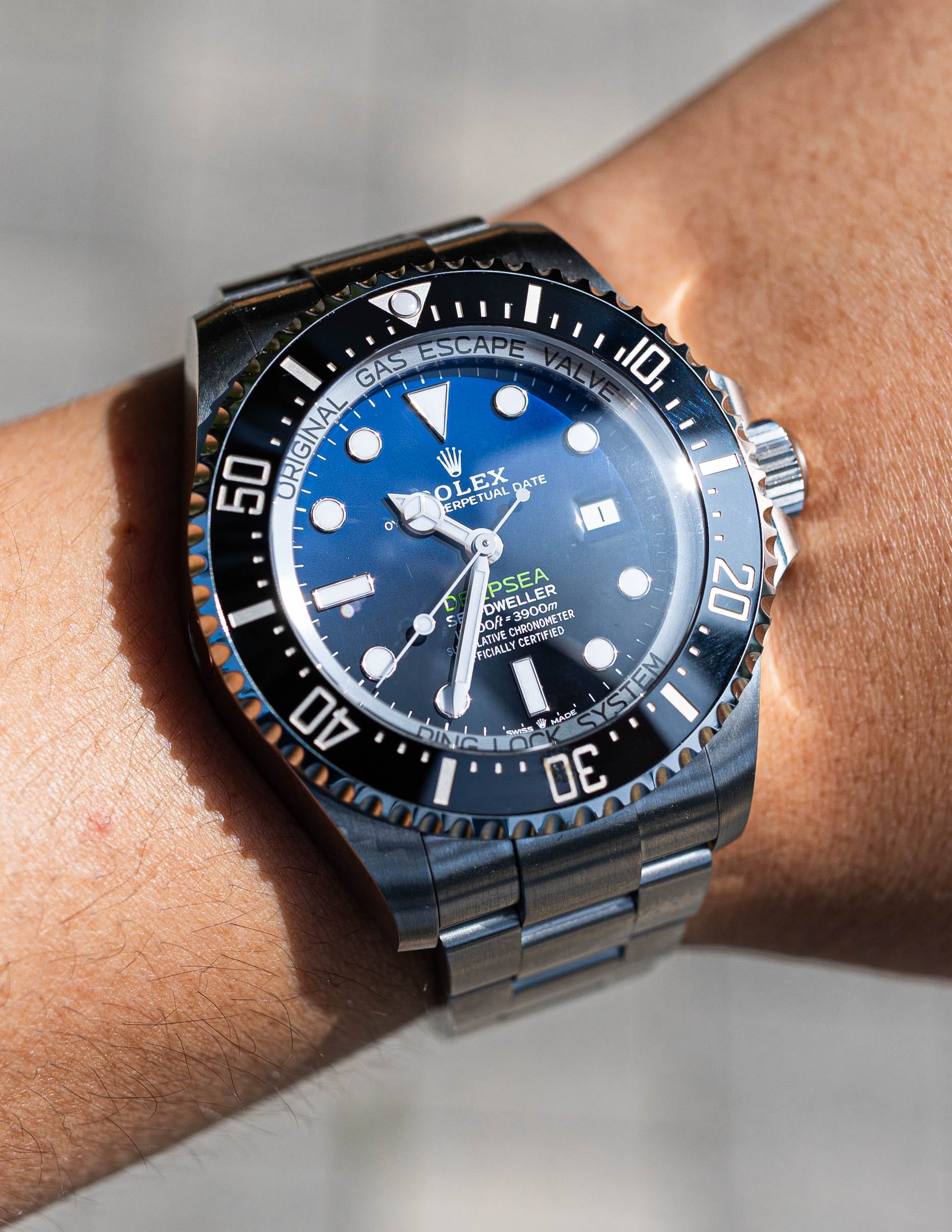
But my judgment of the Deepsea did not transfer neatly to the Pelagos. The Ultra does not have the dramatically curved lugs of the Roger Dubuis or Panerai. Its profile is comparatively straight, and its lugs are broad. If those earlier watches had taught me the value of curved lugs, this one showed that the lesson could not become a rule. Contrary to my expectations, the Ultra looked balanced when I put it on.
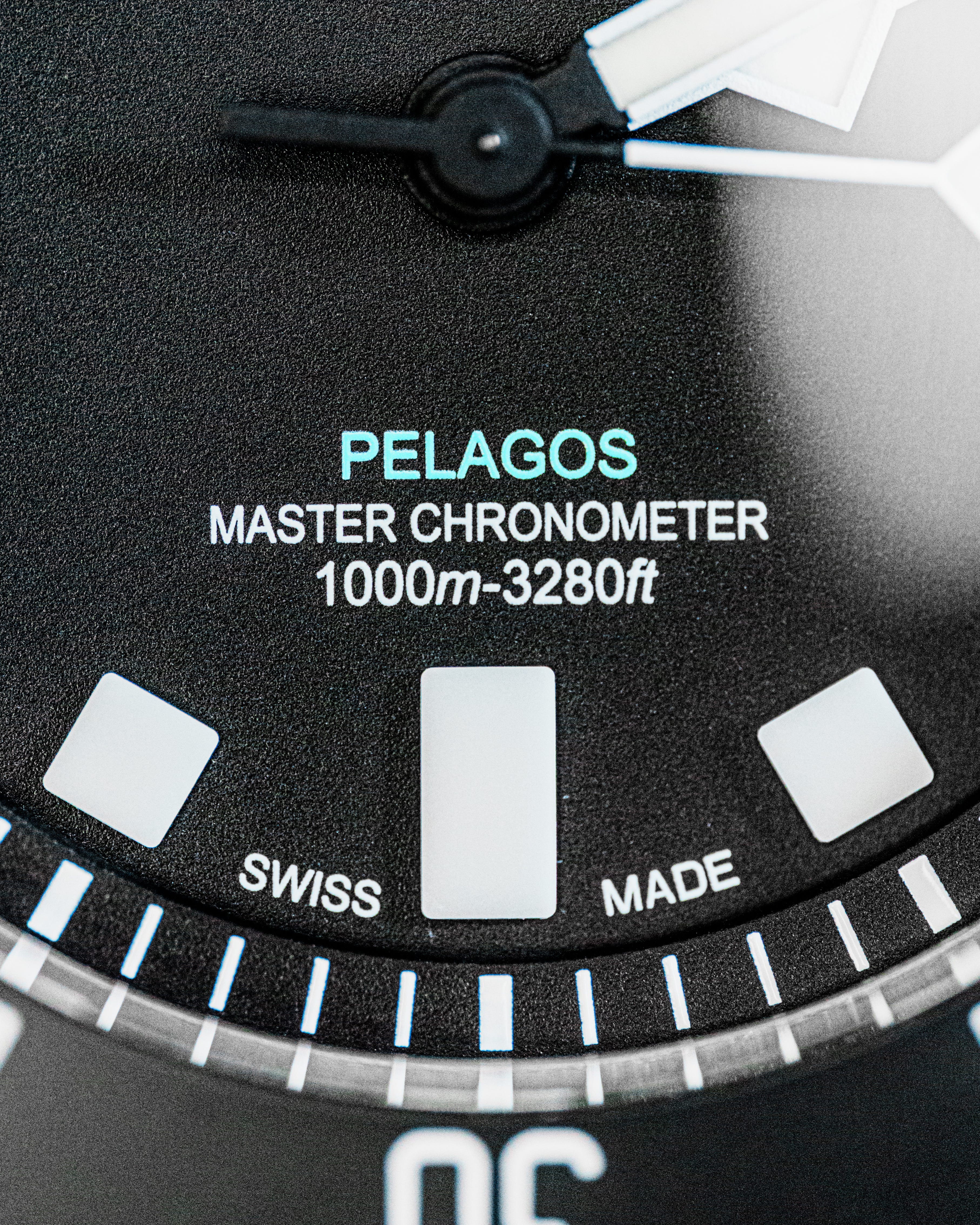
Over time, I came to understand that impression through the proportions of the watch as a whole. The snowflake hands and substantial markers looked entirely at home within the broad dial. There was none of the awkwardness of a case that appeared to have grown while its other elements were left behind. The parts were in scale with one another, and that relationship held on my wrist. To my eye, 43mm gave the design the space it needed.
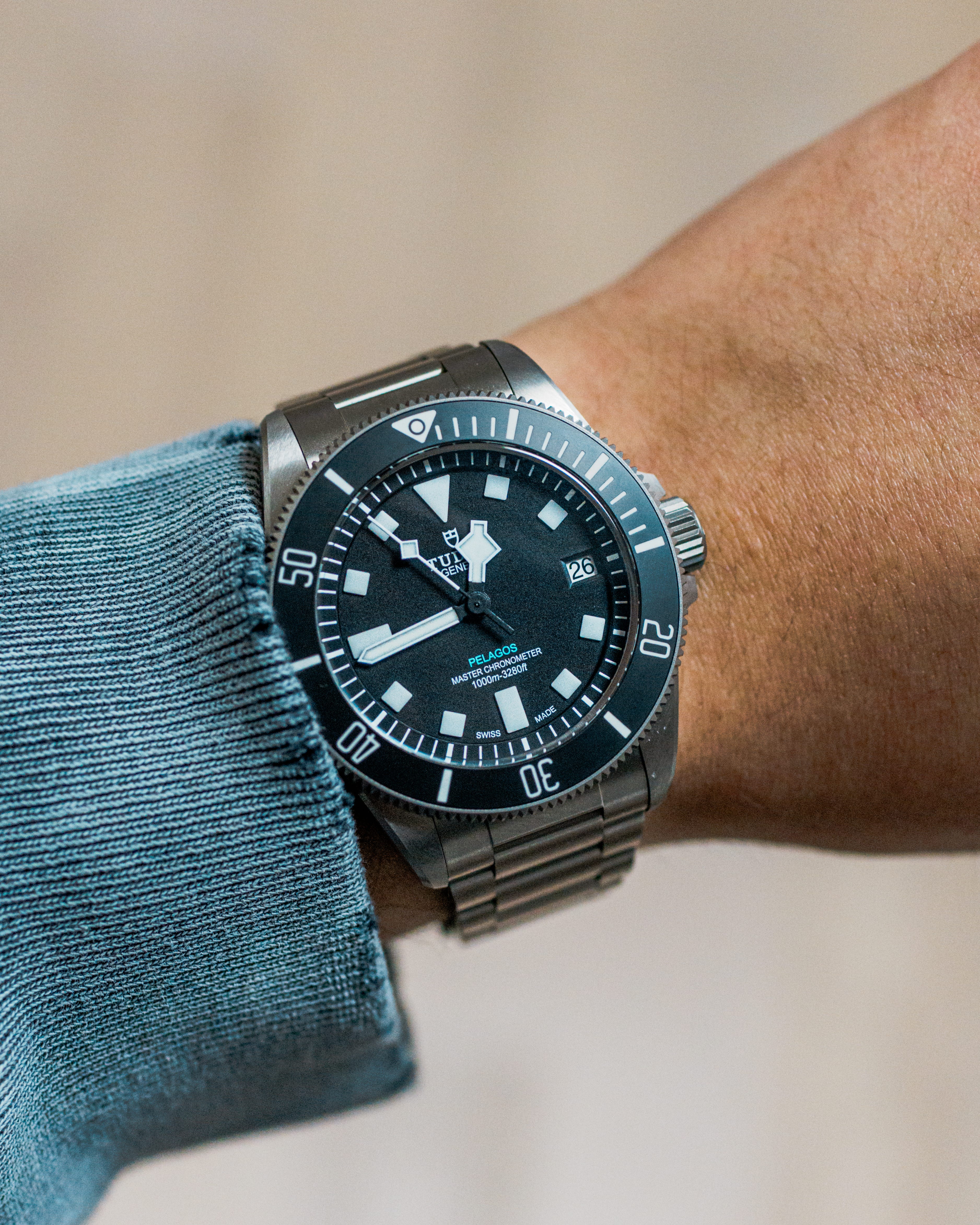
This also challenges the assumption that a smaller watch is necessarily a better-proportioned one. On a particular wrist, the thick case of a 39mm Black Bay Pro can look bulky, while the broader 43mm Pelagos Ultra can appear more natural. Diameter alone cannot determine which looks better. That depends on how width, height and the proportions of the individual elements relate to the wearer. A smaller diameter does not guarantee a successful result, any more than a larger one guarantees imbalance.
I also put the Ultra on friends with slimmer wrists and found that it looked good on them. My own wrist circumference of around 18cm could not fully explain those results. This does not mean the watch will suit everyone. It does suggest that matching a particular wrist measurement to a prescribed diameter misses differences that become apparent when the watch is actually worn.
The Ultra is also a watch I sold and later brought back into the collection. During ownership, the dial’s surface and the overall proportions left a more lasting impression than my initial concern about size. I chose it again because I liked the watch that those dimensions created. Its 43mm diameter was not a concession I had agreed to make.
I now resist drawing a boundary around diameter before considering the watch itself. I look at how widely the case covers the wrist, how prominently it rises in profile, and the outline formed by the lugs and bracelet or strap. On the same wrist, one watch can look naturally in place while another stands out as an awkward block. Once I have seen that difference, calling a watch “too large” has a specific basis.
Looking straight down during a fitting is not enough. Turn the wrist to examine the profile. Studying a watch close up can give a different impression from seeing yourself wearing it. We cannot spend months owning every watch we consider, but we can give ourselves an opportunity to see what the specification sheet leaves out.
What I want is a watch that looks proportionate on my wrist. That means allowing for the possibility that 45mm may look entirely appropriate, while 39mm may look too large. Diameter is measured on the watch. Proportion is judged on the wrist.
15cm here, small but flat wrist. However.. I dig big if it fits.
Ultra fits. 40mm Breguet, nope. Panerai nope, overhangs wrist. Seiko SNR043 LX Diver ? 44mm x 15mm and fits wonderfully and isn’t even top heavy (Ti and low slung center of mass)
More than ever I need to try b4 I buy.
Some small watches don’t fit and some huge ones are fine. Curved down lugs essential on the biggies.
BTW - re Tudor Yup, that steel BB Pro that’s 15mm thick is bonkers heavy, and very top heavy, and literally too painful for me to wear. But my 52mm lug to lug MN FXD is pure pleasure to wear and it fits perfectly. 12mm thick and Ti - disappears on wrist, so love it 🥰