
I’d given Tudor’s Black Bay Chrono 41 plenty of chances. Four dial variations, in fact: Miami Pink, Blue, Flamingo Blue and, most recently, Opaline. The design kept drawing me back, and there was plenty to like about Tudor’s take on the sports chronograph. But whichever dial I chose, I could never quite get comfortable with how the watch sat on my wrist.
Then I bought the new Black Bay Chrono 39 “Bumblebee”, and the Opaline was promptly shown the door.
A week later, I like its replacement far more than I expected. The smaller case made an immediate impression, but the honey-yellow dial has been the surprise. A colour I initially needed to get used to is becoming a big part of why I enjoy the watch.
My wrist measures 18cm, which gives me a fair amount of room to work with. Even so, the Chrono 41 always felt slightly too big. Its 41mm diameter, 14.4mm thickness and 22mm lug width created a substantial package, and the top-heavy feeling made finding the right bracelet fit frustrating.
That was the catch each time I came back to the model. Tudor could change the dial and renew my interest, but the case remained the case. Eventually, the same frustration would return.
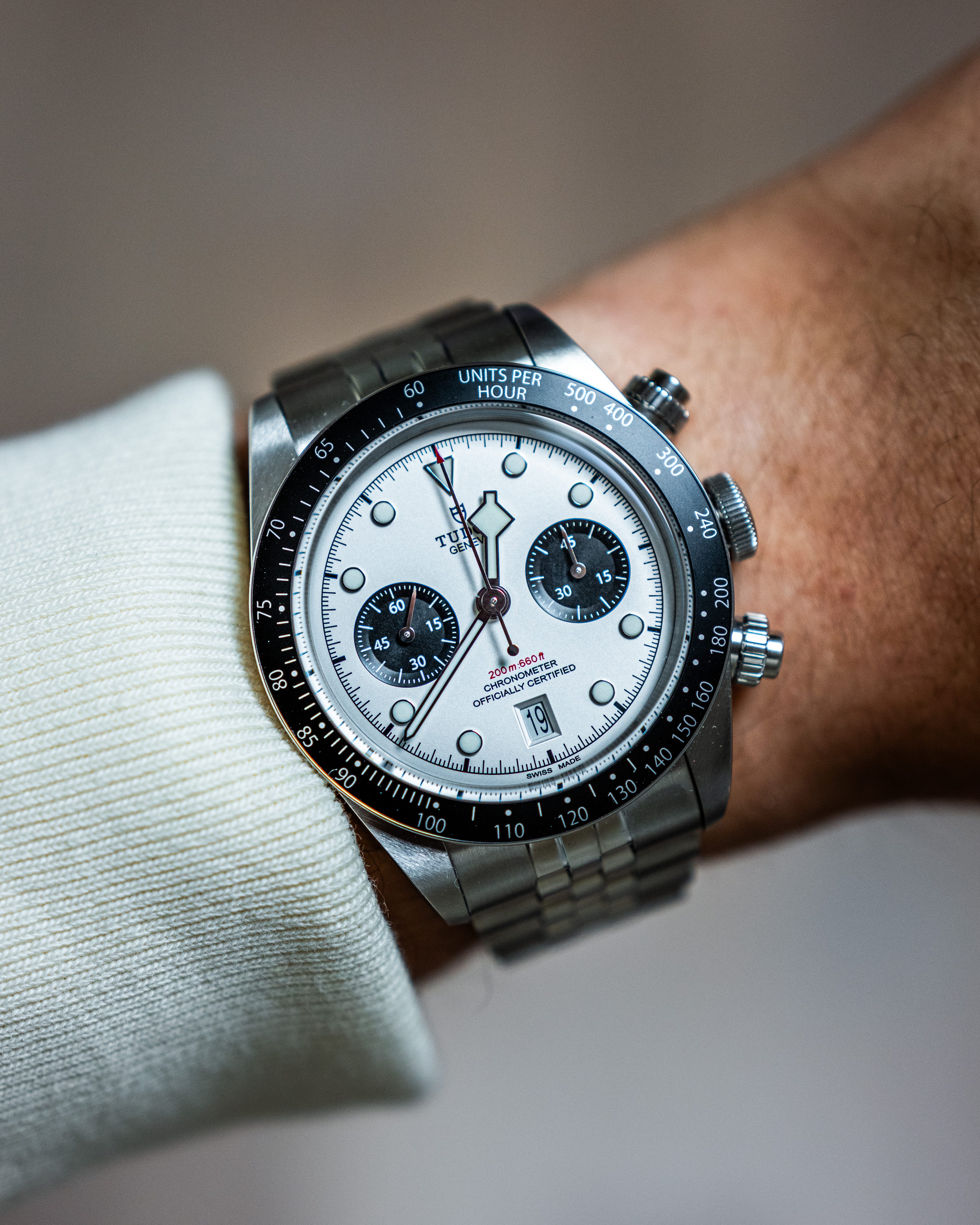
The Bumblebee gets to the heart of that problem. Diameter drops to 39mm, thickness falls to 13.1mm, and the lug-to-lug span is 3mm shorter. Lug width also comes down to 20mm. Those numbers deserve attention because of what they add up to on the wrist.
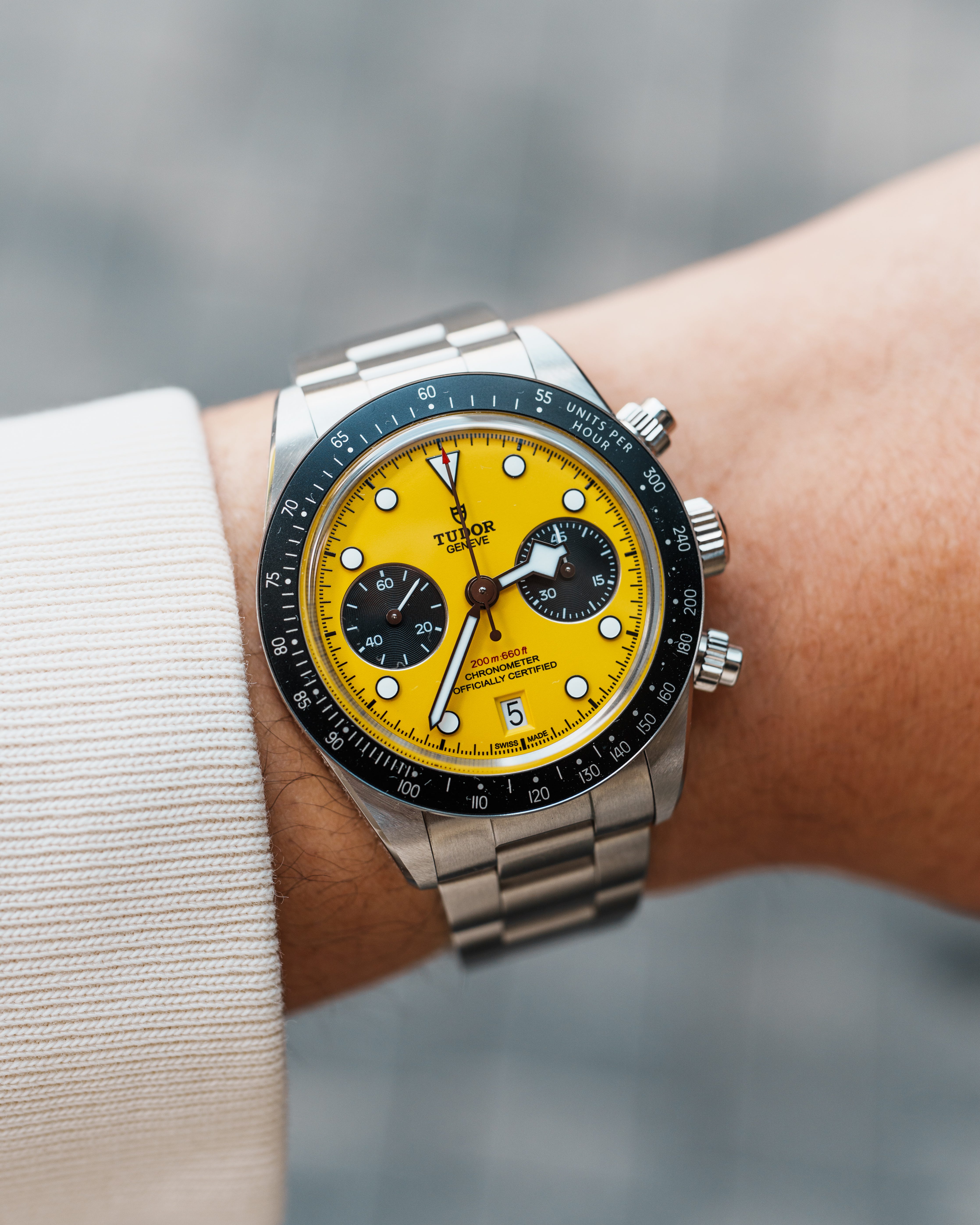
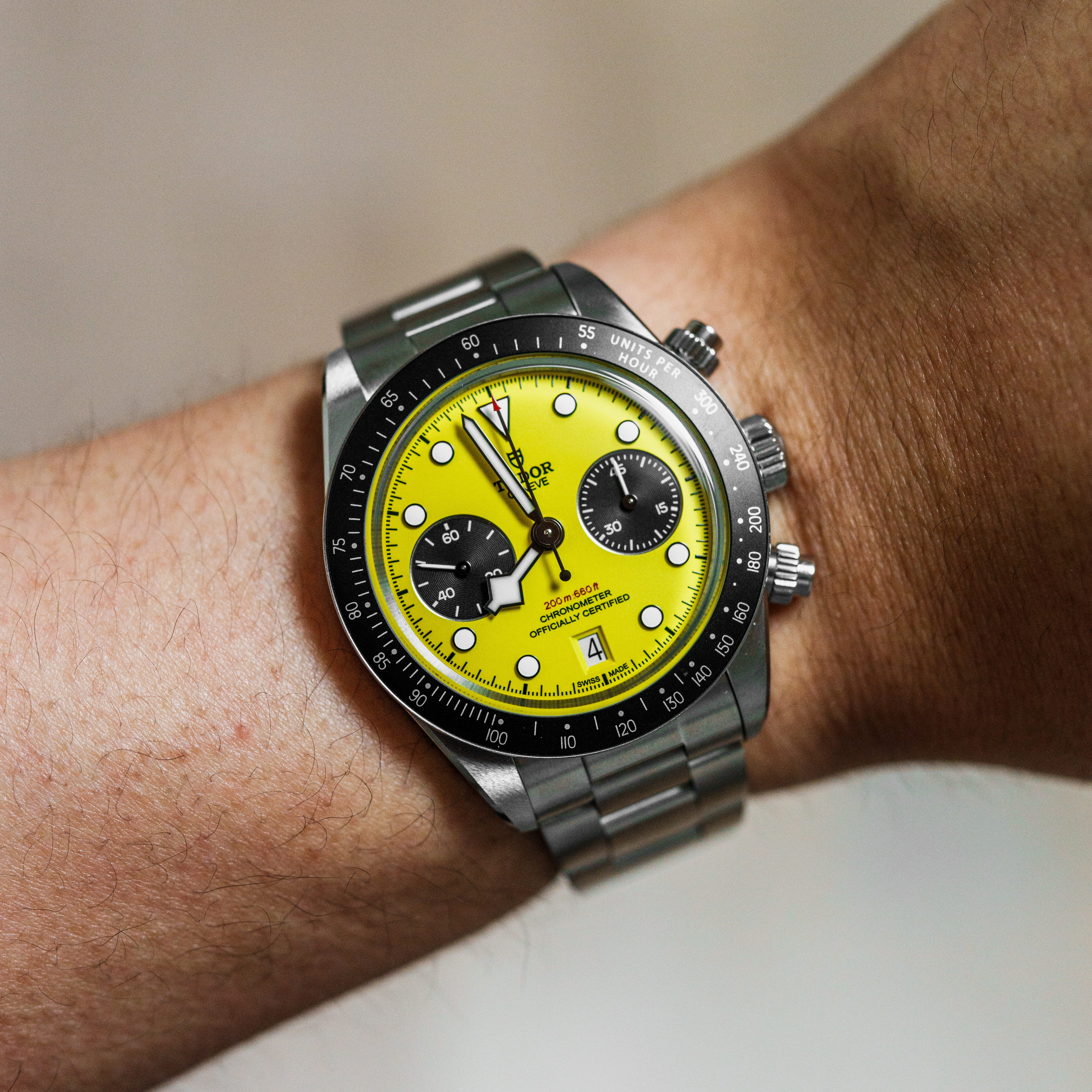
The watch feels balanced. The top-heavy sensation has gone, and there’s still plenty of presence without the larger model’s bulk. It’s a substantial improvement in the part of ownership I had struggled with most. Selling the Opaline immediately was an easy decision.
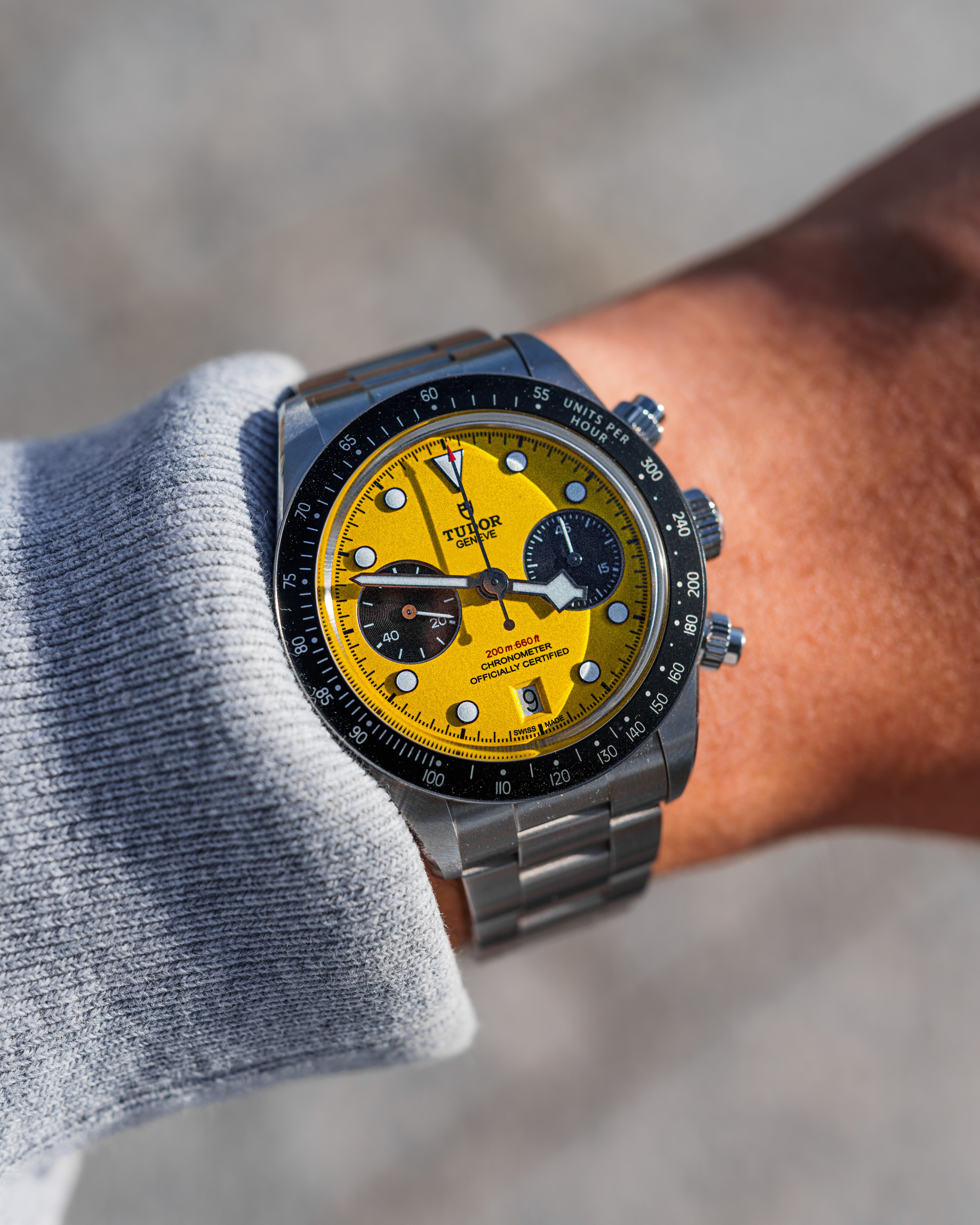
Tudor has also done away with the faux rivets on the three-link bracelet. I won’t be mourning those. The cleaner design suits the smaller case, and the T-fit clasp brings useful adjustment to the package. Together, the changes make the Bumblebee feel like a more considered version of a watch I already wanted to like.
Better still, the MT5813 remains inside. That means the same COSC-certified automatic chronograph movement, column wheel and approximately 70-hour power reserve. Tudor has found room to improve the proportions around an established movement, which makes the reduction in size particularly satisfying. It also leaves me wondering why I put up with the larger case for so long.
But dimensions only explain part of the attraction. The yellow deserves some credit, too.
The black accents look terrific against that honey-yellow backdrop. Beyond the sub-dials, the black minute track and the surrounds of the indices and hands give the dial a crisp, cohesive look. Black and yellow is a proven colour combination, and Tudor makes the most of it here.
I had similar doubts when fitting an Arbour green bezel insert to my Black Bay 58. It was a colour choice I needed time to settle into. The more I wore it, the more it grew on me. The Bumblebee is taking me through that process again.
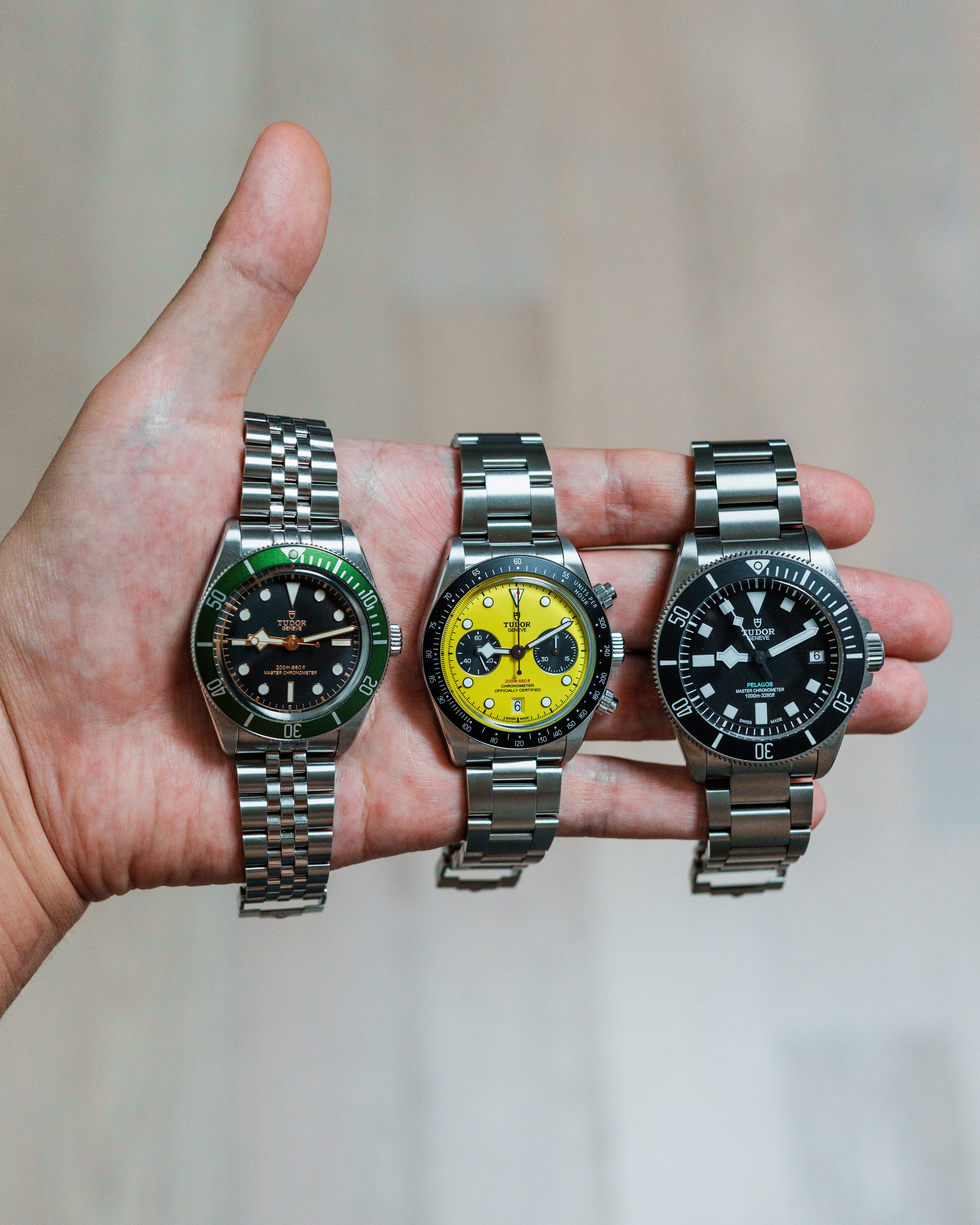
The honey-yellow dial, framed by the black bezel and paired with black sub-dials, gives the Bumblebee an identity of its own. It will inevitably narrow the audience. Someone wanting a discreet chronograph may prefer to wait and see whether Tudor puts this case to work with more restrained colours. I’m increasingly pleased to have the yellow.
The Black Bay 58’s green insert was my own intervention. With the Bumblebee, Tudor supplied the adventurous colour straight out of the box. Both watches have encouraged me to leave a little room for a choice to grow on me.
“Daytona killer” is a deliberately provocative description. In my collection, the argument comes down to satisfaction.
The Bumblebee now offers the combination of comfort, mechanical substance and personality that I want from a chronograph. With the fit sorted and the colour becoming more appealing, the familiar idea of eventually “moving up” to a Daytona needs a little more scrutiny.
At US$6,725, the Tudor also leaves considerable financial distance to a steel Daytona. Its date display is useful, and 200 metres of water resistance adds to its everyday credentials. The mechanical substance was already convincing; now the experience of wearing it is, too.
The Daytona has answers. Its ceramic bezel offers greater scratch resistance than the Tudor’s aluminium insert. Its chronograph includes a 12-hour counter, which the Bumblebee lacks, and Rolex specifies accuracy of −2/+2 seconds per day after casing. Then there is the Daytona’s design, history and the considerable appeal of owning one. Those are legitimate reasons to want the Rolex.
For me, though, the Bumblebee makes that decision less automatic. The old Chrono left a nagging question about whether I should find something that fitted better. Its replacement has answered that question and introduced a colour I am enjoying more with time.
That is enough to earn it the “Daytona killer” label in my book. Tudor has made a chronograph I can choose with enthusiasm and feel satisfied owning. After four dial variations of the larger model, that feels like a much bigger development than another new colour.
The Opaline has already gone. For now, the watch I want to wear is the yellow one already in my collection.
I had a no idea they called this one a bumblebee, that sounds so not Tudor but in a good way. Wear it in good health!
I think I’m a sucker for yellow. Congrats, Sir. Wear it in good health.