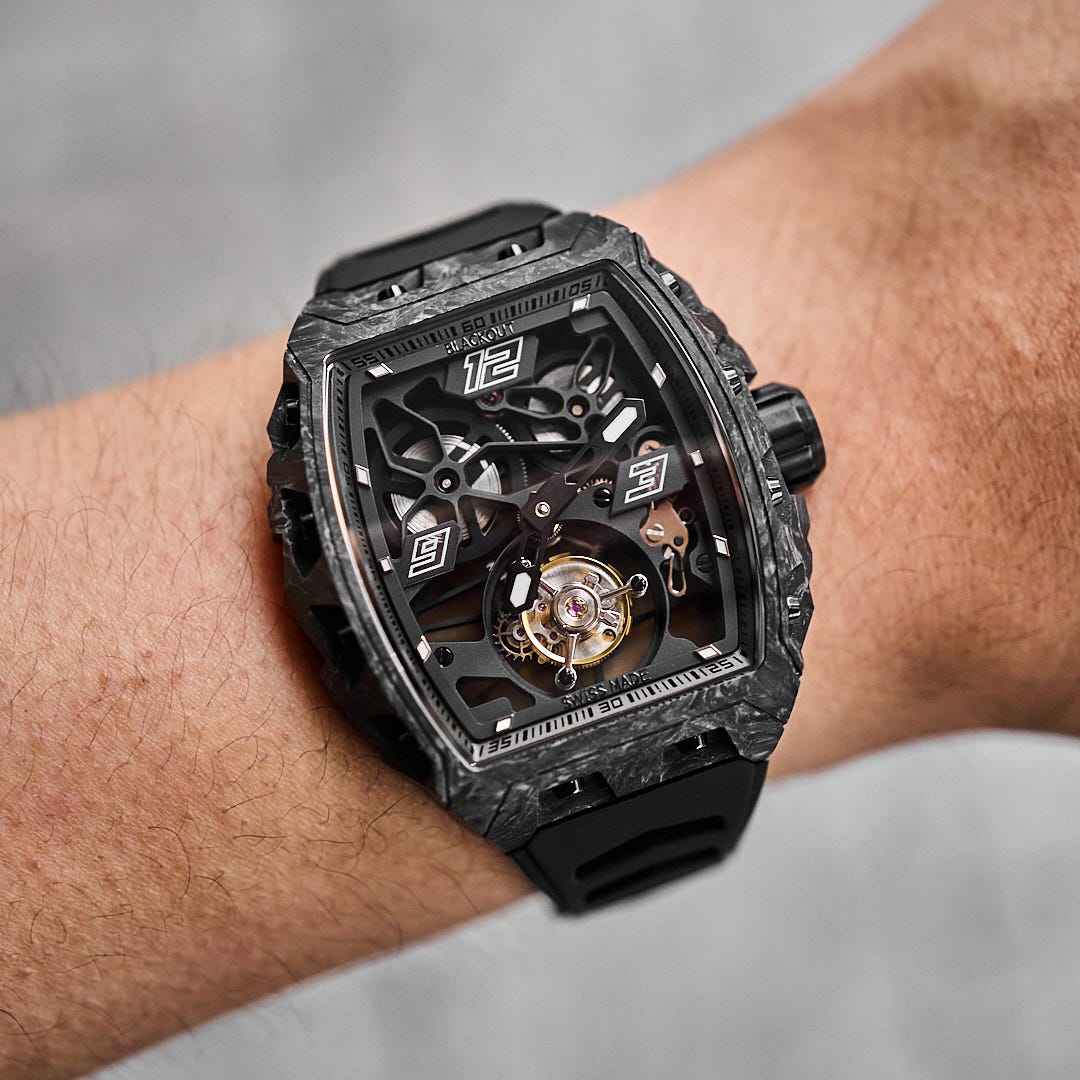
The most useful way to review an upgraded watch is to live with the version that came before it. Specifications can tell you what changed. Ownership tells you whether those changes matter.
The Blackout XP1 Tourbillon LT Centurion was my first tourbillon. I initially saw it as an affordable route into a complication I had admired for years. After several months, however, it became something more instructive: a test of what I would continue to value once the novelty of the rotating cage had worn off. The Centurion introduced me to the tourbillon. The XP1 Ultimate showed me which parts of that experience I wanted to keep.
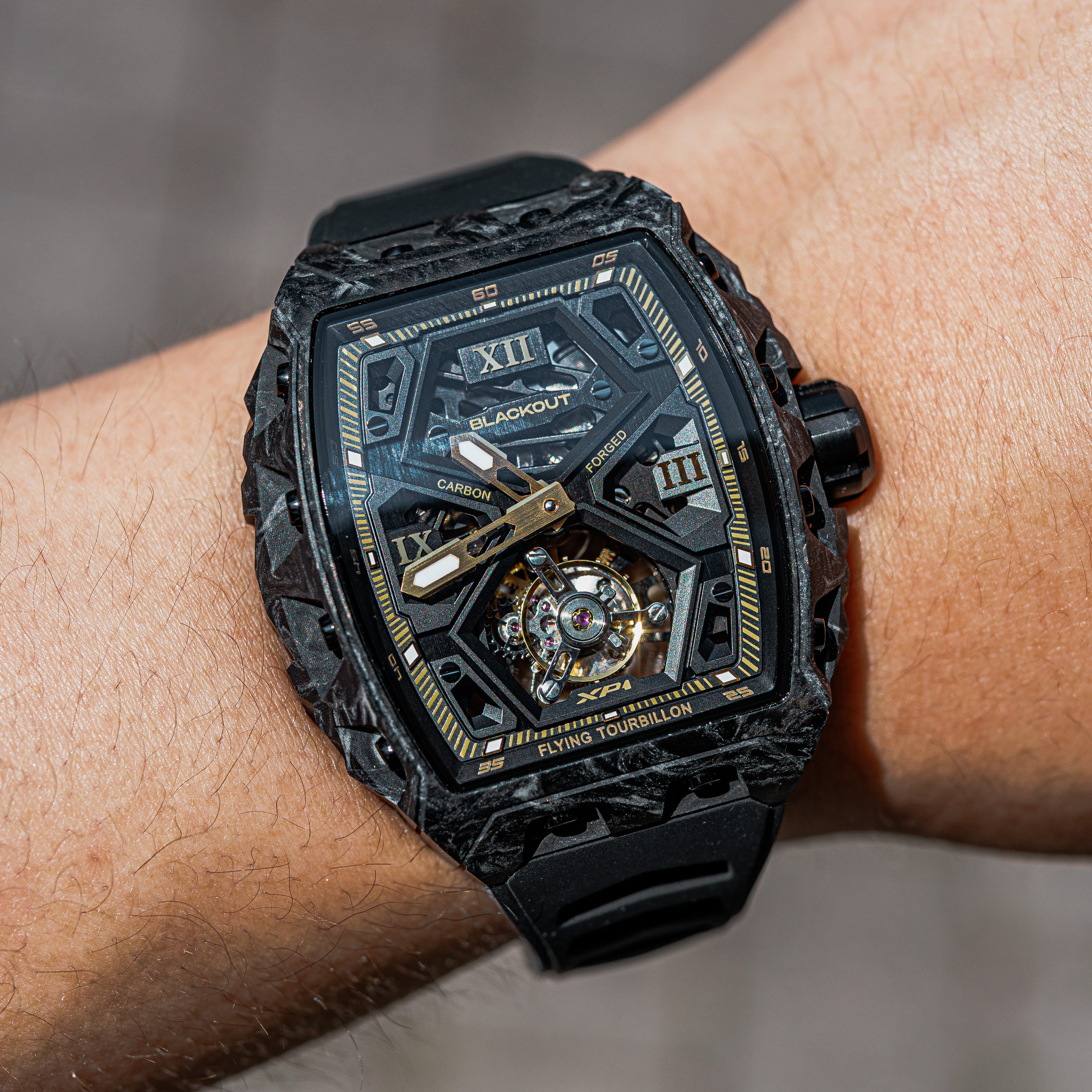
Blackout requires a little context. The company began in 2006 by customizing existing luxury watches before changing ownership and shifting toward proprietary models in 2022. Its modern identity is centered on the XP1, a large tonneau-shaped watch combining forged carbon with an exposed flying tourbillon. The references are not difficult to identify. Richard Mille established this combination of shape, material and mechanical theater at the highest end of the market, where complicated models can cost hundreds of thousands of dollars.
Blackout approaches that same broad genre from a very different price point. Most XP1 models use what the company calls a hybrid movement: an Asian-produced tourbillon base that is dismantled and inspected in Geneva, fitted with selected Swiss components, then assembled and tested in the brand’s workshop. It is not Swiss Made, nor does Blackout claim otherwise. That construction is what allows the XP1 Centurion to offer a forged-carbon flying tourbillon for US$3,700.
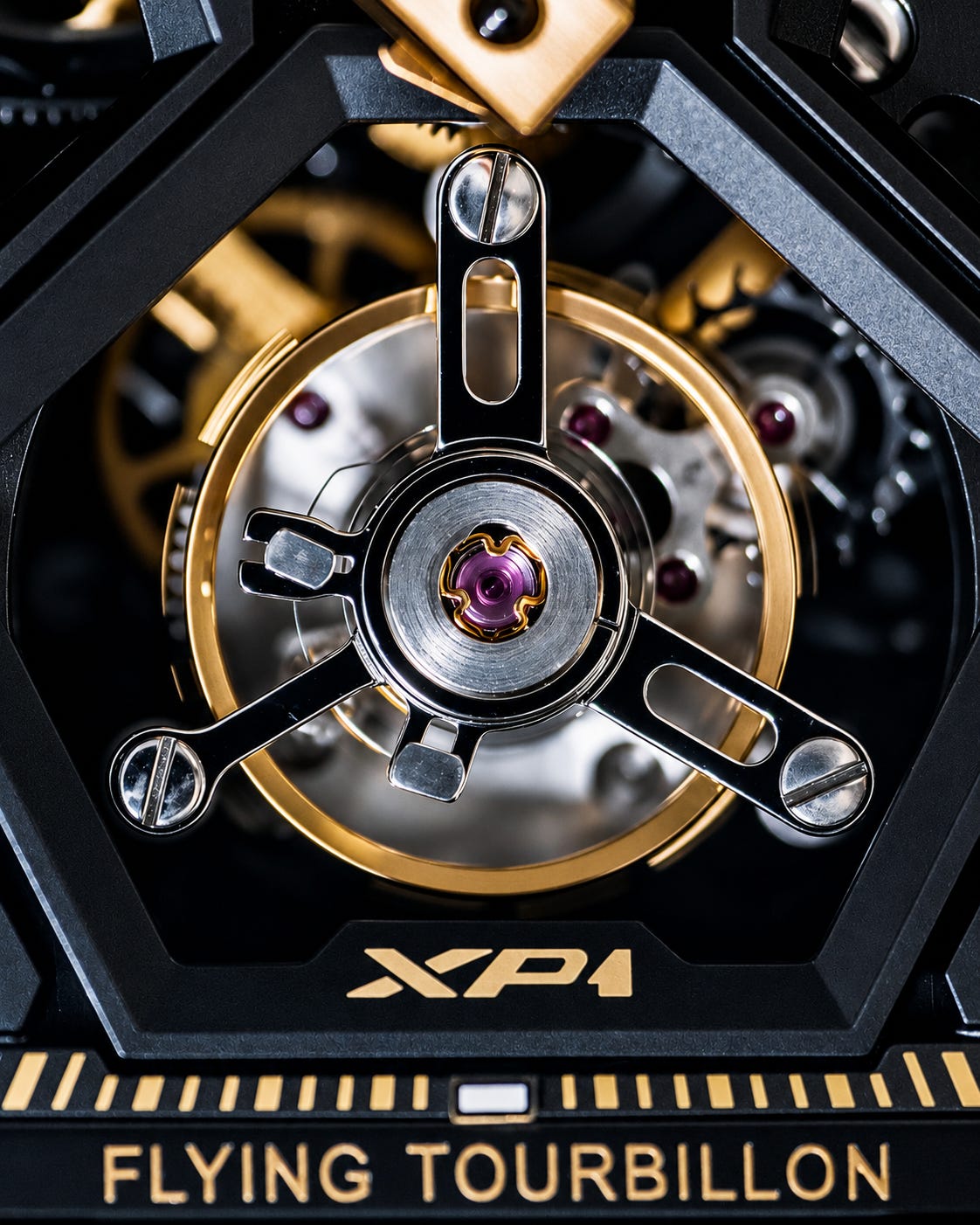
The Ultimate occupies the other side of the argument. It retains the basic XP1 concept but replaces the hybrid caliber with a fully Swiss Made, hand-wound flying tourbillon from DW&Co. The price rises accordingly to US$7,950.
On paper, this looks like a simple hierarchy: the Centurion is the affordable version, while the Ultimate is the better one. Owning both taught me that the distinction is more complicated. The Centurion is not merely an unfinished Ultimate, and the Ultimate is not automatically worth the additional US$4,250 to every buyer. They answer similar desires at different stages of collecting.
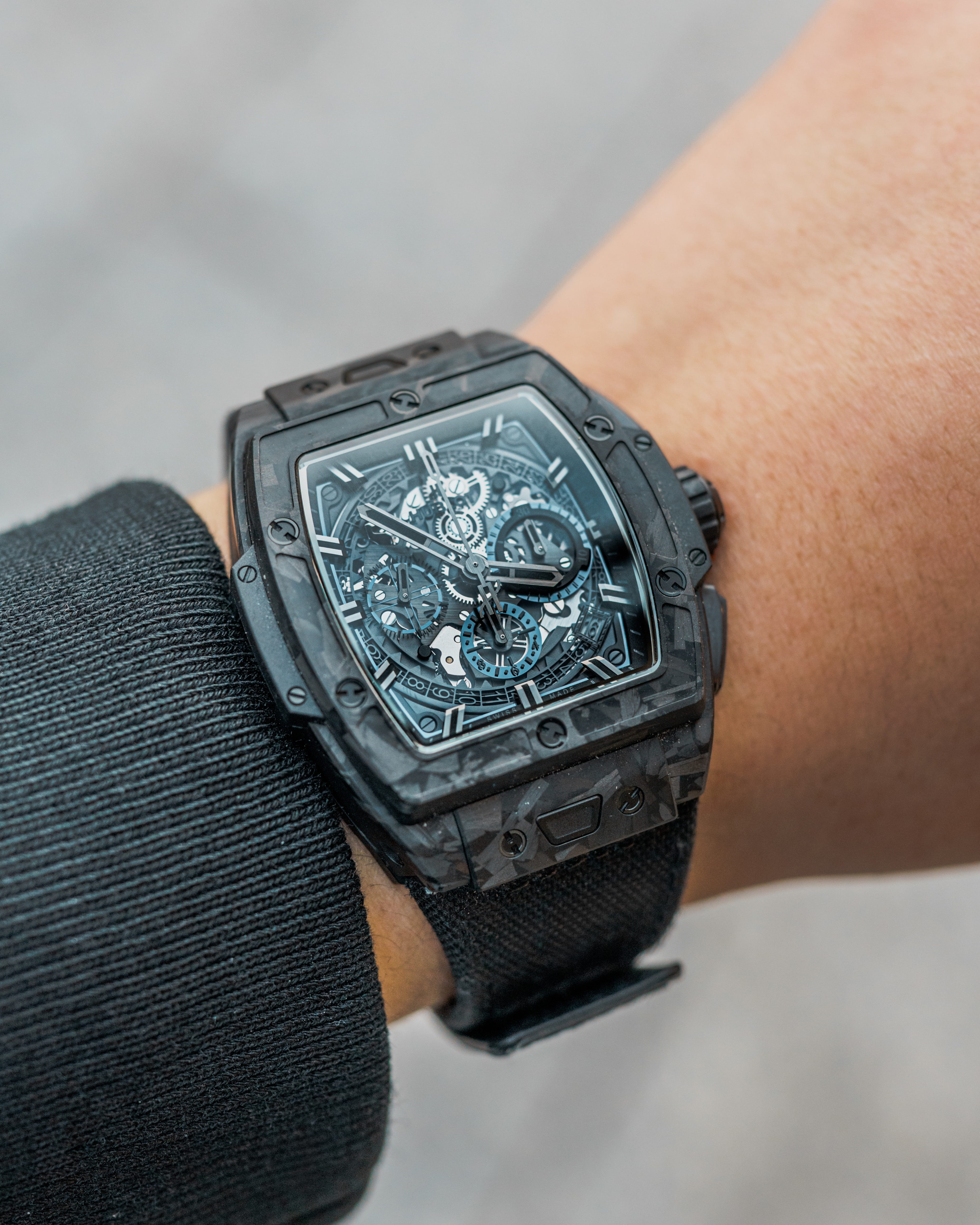
I had long wanted a complicated Richard Mille but could never realistically justify spending a six-figure sum on a single watch. That same attraction previously led me to own the Hublot Spirit of Big Bang twice. Both Hublots delivered the tonneau case, contemporary materials and openworked appearance I wanted, but neither became a keeper. The buckle attached to the Velcro strap was simply too uncomfortable during an entire day of wear.
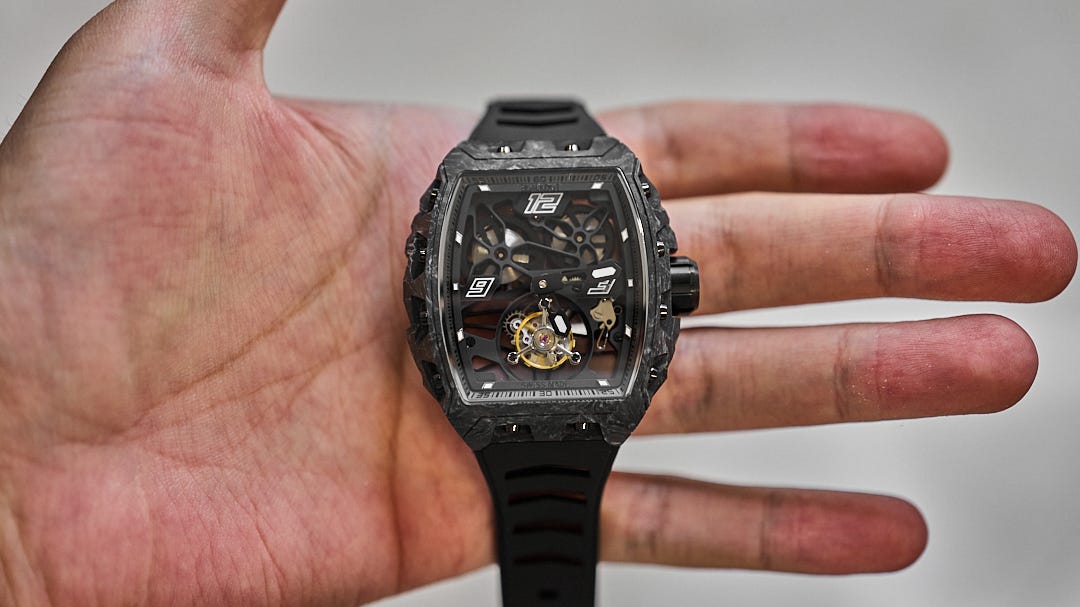
I did not intend to buy the Centurion when I first tried it on. That changed almost immediately. Its forged-carbon case felt far more substantial than its price suggested, while the soft rubber strap and folding clasp made it more comfortable than either of my Hublots. The 44mm-by-52mm case is 14.8mm thick and weighs only 110 grams, giving it considerable presence without placing much weight on the wrist. Even on my approximately 18cm wrist, it felt large rather than unmanageable.
More importantly, the carbon did not feel like a compromised version of a luxury material. Its texture and solidity compared favorably with the cases of considerably more expensive watches I had owned. The Centurion did not persuade me because it resembled something costly from across the room. It became persuasive when I handled it.
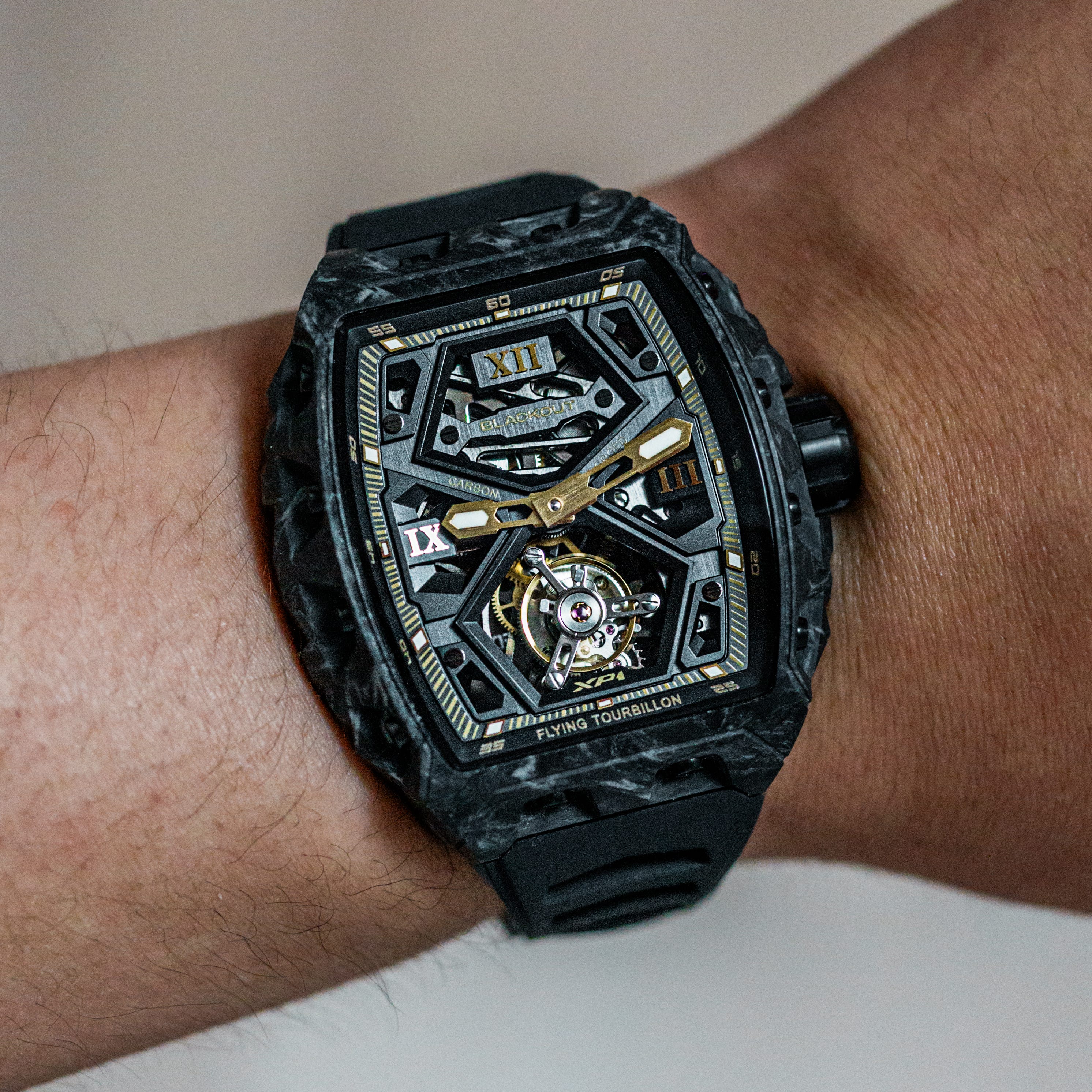
Then there was the tourbillon. For the first few months, watching it rotate through the dial provided exactly the experience I had hoped for. The Centurion made an otherwise distant complication immediate, wearable and surprisingly practical. At first, that seemed sufficient.
But novelty has a way of revealing what comes after it.
The longer I owned the Centurion, the more my attention moved away from the tourbillon itself and toward everything surrounding it. The prominent X-shaped bridges across the dial gradually became the first thing I saw whenever I checked the time. The watch was openworked, but not open enough for my taste. Rather than drawing my eye into the movement, the X appeared to sit between me and the mechanism I had bought the watch to enjoy.
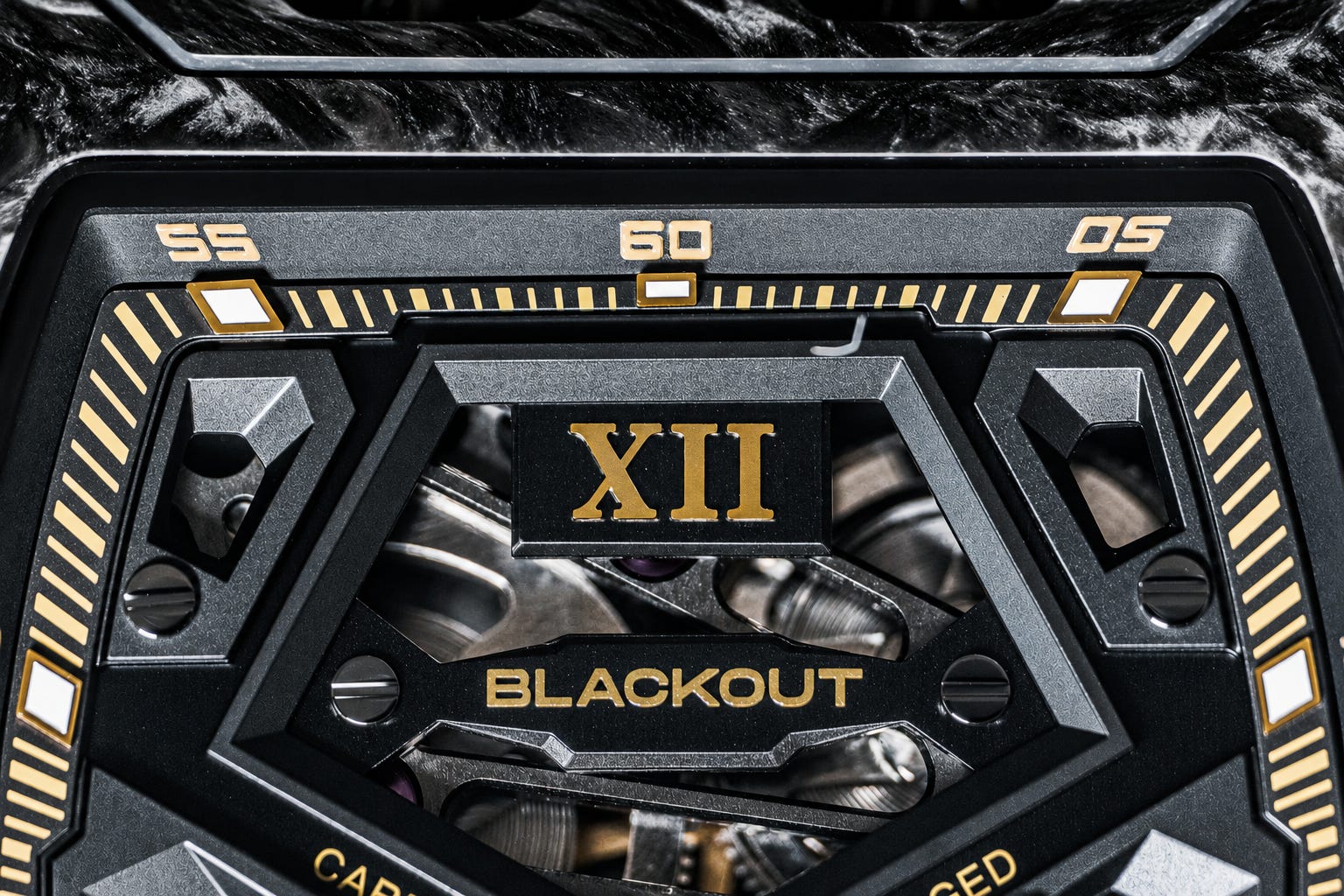
I also became increasingly conscious of the movement’s finishing and origins. This was not because I believe an Asian foundation automatically makes a caliber inferior. The Centurion’s entire value proposition depends upon that foundation. Without it, Blackout could not offer the same complication at US$3,700.
The problem was more personal. In an openworked watch, the movement is not simply an engine hidden behind the dial. It is the dial. Its architecture and finishing are visible every time the watch is worn, making them part of the emotional experience rather than footnotes on a specification sheet. Once the excitement of owning my first tourbillon settled, I realized that I wanted a movement whose appearance could sustain the same scrutiny as the case.
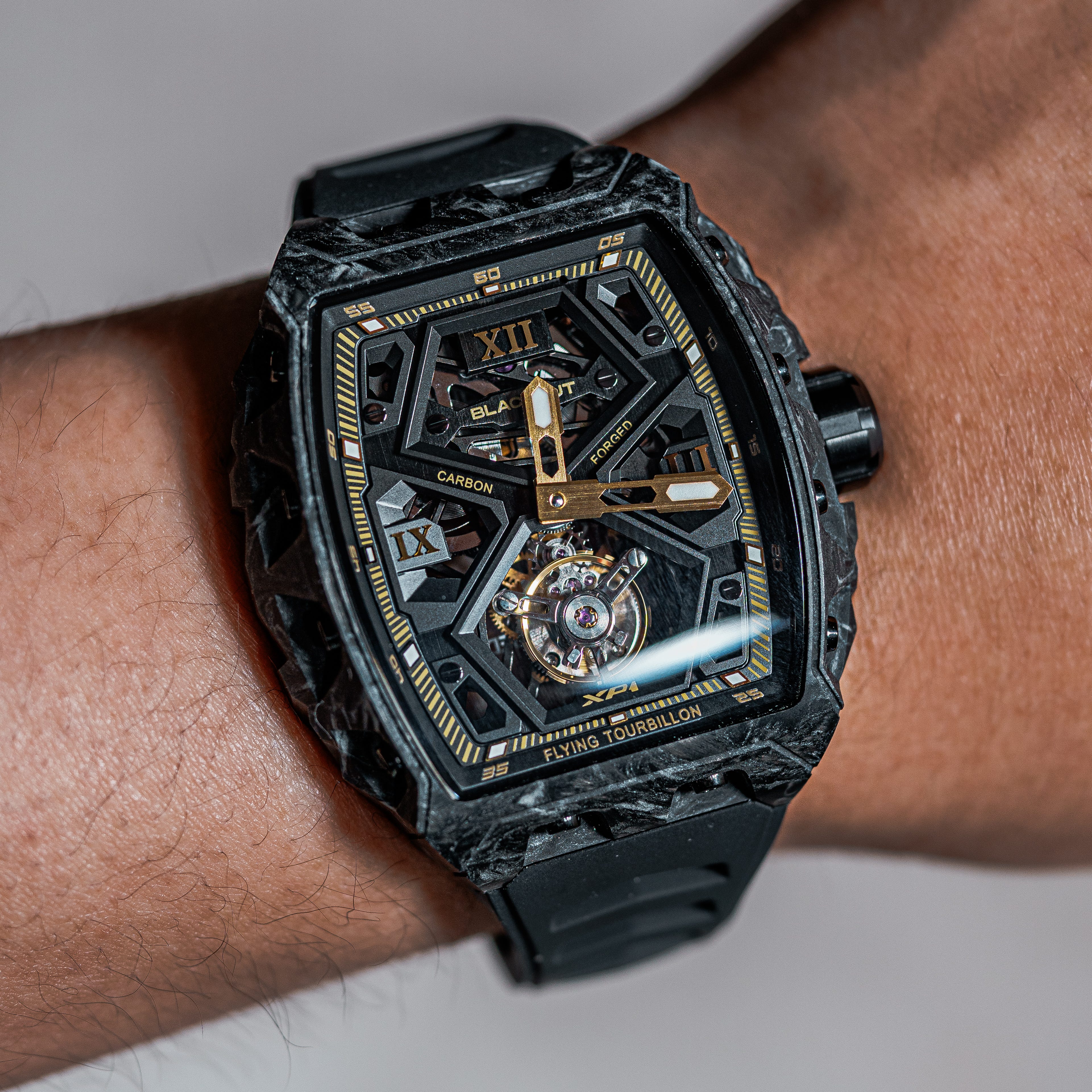
That realization eventually led me to sell the Centurion. It also explains why I did not immediately buy the Ultimate when the opportunity first arose. I initially chose the Tudor Pelagos Ultra instead, partly because I suspected that installing a Swiss movement inside the same basic watch would not solve the design fatigue that had pushed me away from the original. A country of origin cannot repair an incoherent composition.
What ultimately brought me back was the realization that the Ultimate was not merely the Centurion with a more prestigious movement.
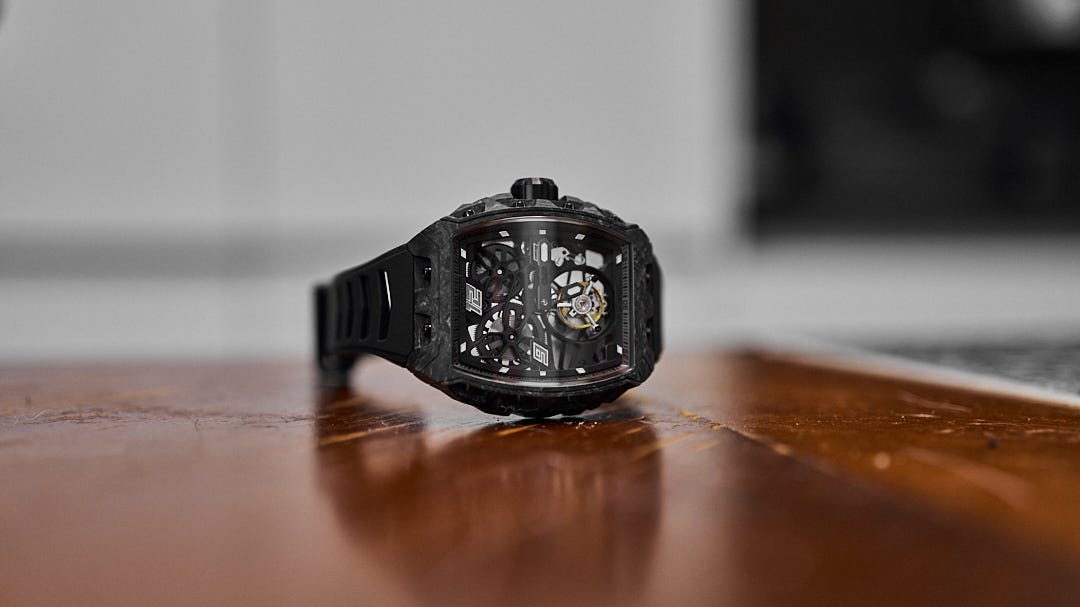
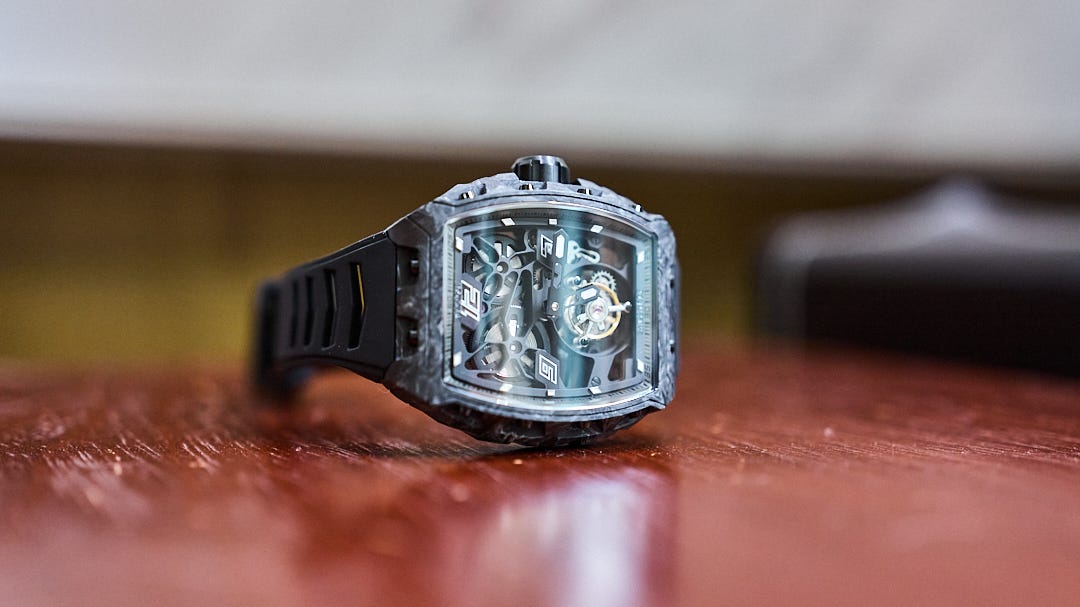
The underlying case concept remains familiar, preserving the lightness of the forged carbon, the comfortable strap and the exaggerated tonneau silhouette that first made the XP1 appealing. The architecture surrounding the movement, however, has been reconsidered. The Ultimate’s more extensively openworked construction removes the X-shaped structure that had come to dominate my view of the Centurion.
That distinction became immediately apparent once I began wearing it. With the Centurion, my eye tended to stop at the X. With the Ultimate, it travels through the caliber. The cleaner structure creates greater depth and allows the flying tourbillon to become the center of the composition rather than one spectacle competing with another.
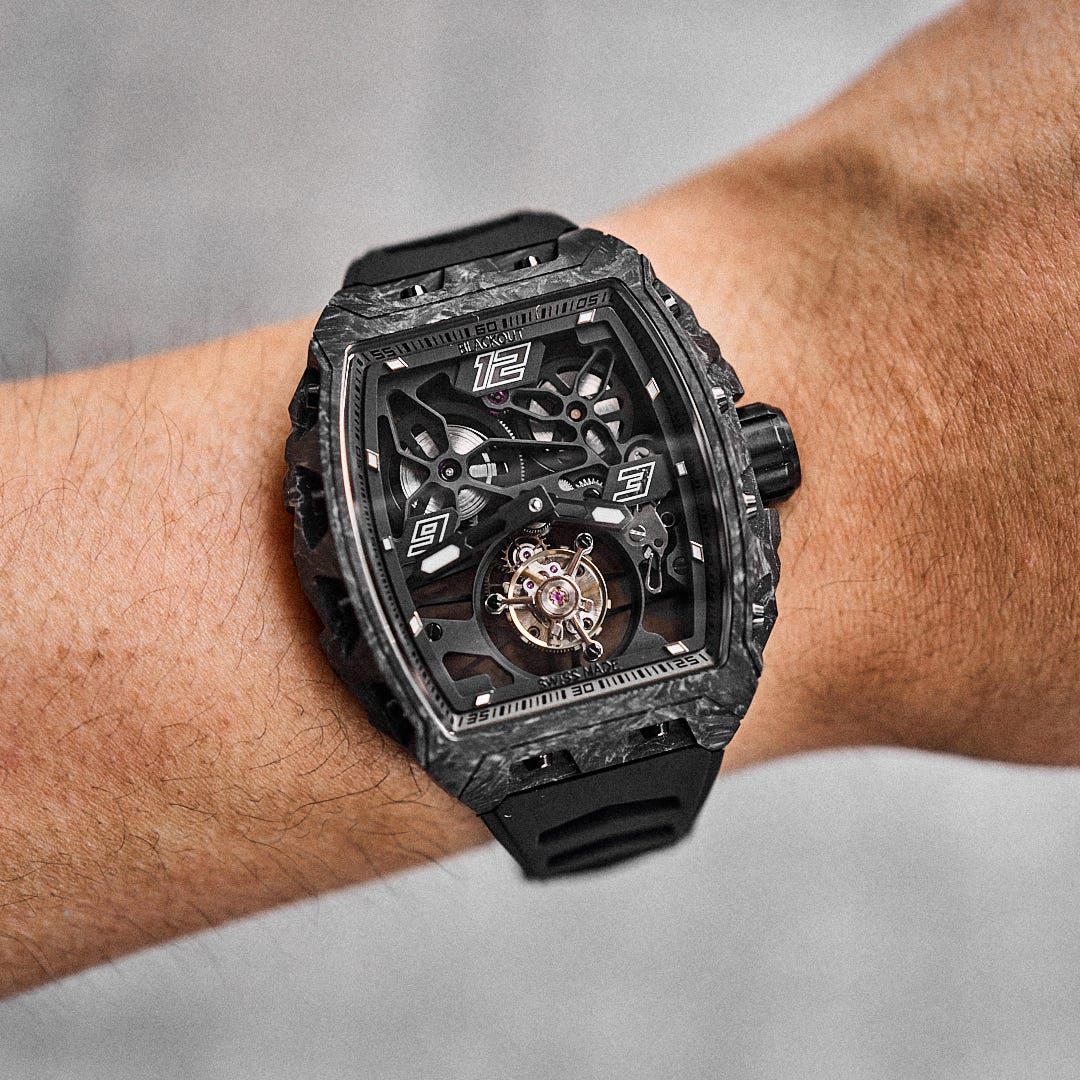
The Swiss Made designation matters to me, but not as a magic phrase. If the Ultimate had retained the same obstructive architecture, a different movement origin alone would not have changed my opinion. It succeeds because the provenance arrives with something tangible: more satisfying finishing, cleaner construction and a dial that finally allows the mechanism to speak for itself.
Owning the Ultimate also confirmed that the basic XP1 platform had never been the problem. I still appreciate the lightness of the case, the tactile quality of the carbon and the comfort of the strap. What eventually pushed me away from the Centurion was not the concept, but the feeling that its execution stopped just short of what I wanted.
Whether crossing that final distance is worth US$4,250 depends entirely on the buyer. The Ultimate is not more than twice as comfortable, nor does its tourbillon rotate with more than twice the drama. Value in watchmaking rarely follows such tidy arithmetic.
For a first-time tourbillon owner, the Centurion may remain the more compelling proposition. It delivers the forged-carbon case, bold wrist presence and mechanical spectacle that define the XP1 for US$3,700. It also expresses Blackout’s original purpose more clearly: bringing a complication that many enthusiasts encounter only through display cases and photographs into a realistically attainable price range.
The US$7,950 Ultimate addresses a different collector. It is for someone who has moved beyond asking whether a watch contains a tourbillon and begun asking how the entire watch has been constructed around it. The additional money does not merely purchase a Swiss passport for the movement. It buys the more coherent architecture and higher level of execution that I found myself wanting only after living with the original.
The two watches should not be understood simply as inexpensive and expensive versions of the same XP1. The Centurion explains why Blackout exists. The Ultimate demonstrates how far that idea can be taken.
I am glad the Centurion was my first tourbillon. Had I moved directly to the Ultimate, I might have reduced its appeal to the words “Swiss Made” and missed the more meaningful difference. Owning both taught me that provenance matters only when it produces something tangible on the wrist.
The Centurion made the complication attainable. The Ultimate made the watch feel complete.